

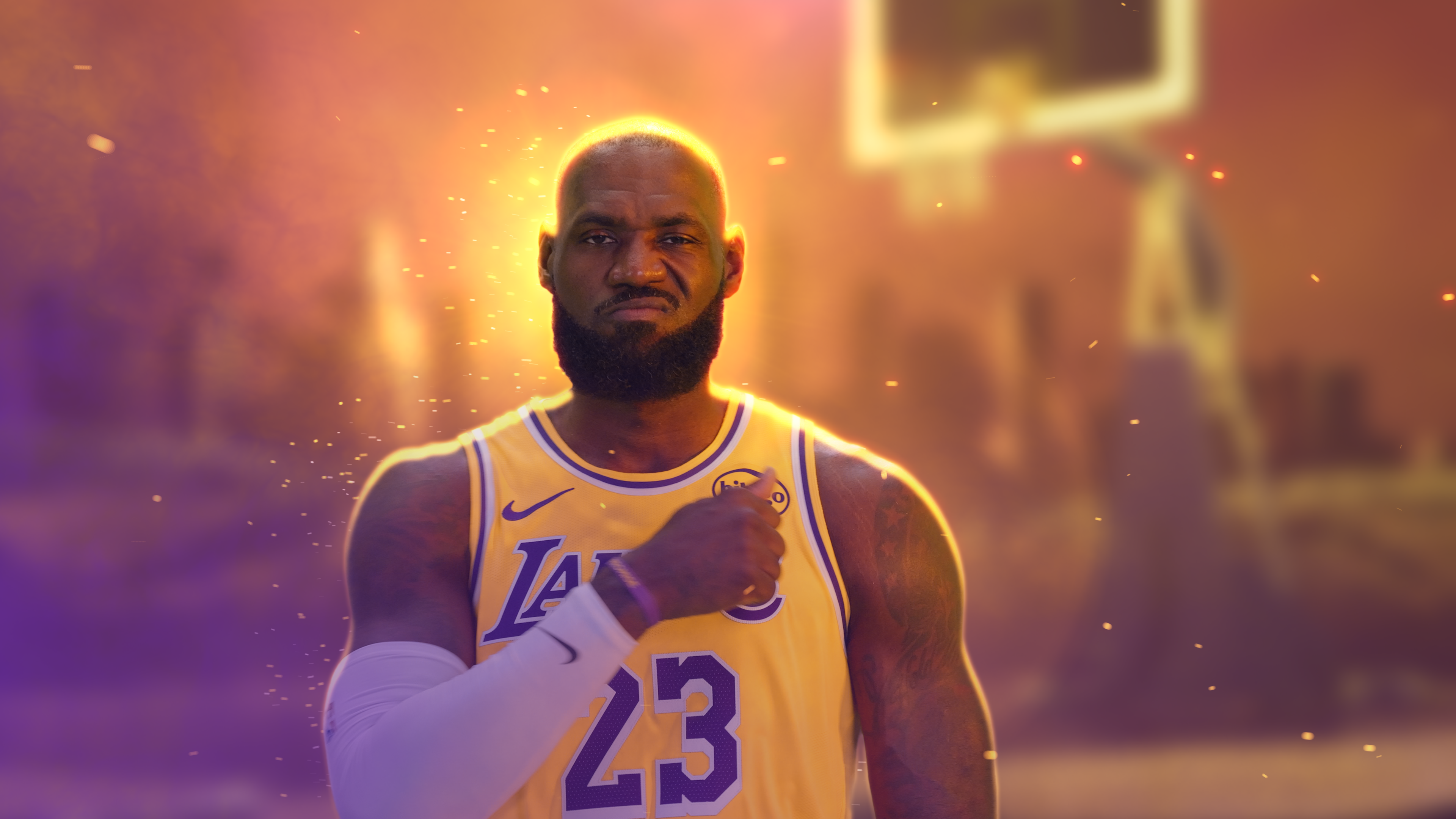
Building the Lakers 2025–26 Season Intro
There are certain projects that feel a little surreal, no matter how long you’ve been doing this.
This was one of those.
I’ve been a Lakers fan since first grade—but not in the way you’d expect. My brother was a Celtics fan. So growing up, whenever basketball was on, it was usually Celtics games… which meant a lot of Lakers games too. That rivalry was everywhere. That’s how I first saw them.
But the reason I stuck with the Lakers had nothing to do with rivalry.
It was Magic Johnson.
That smile, the energy, the way he carried himself—it just looked like he was having fun out there. And as a kid, that was it. That was enough.
Fast forward a few decades, and I’m being asked to create the season intro video for that same team. That’s not something you plan for. It’s one of those rare moments where a long career and something personal just… line up. And when it does, you realize pretty quickly—this is why all those years of doing the work actually matter.
It Didn’t Start With Basketball
This is the part people usually expect to be about highlights and hype. It wasn’t. The first question was just:
What should this feel like?
Because the Lakers aren’t just a team. There’s weight there. History. Expectation. If you treat it like a generic hype video, it falls apart immediately. So instead of going literal, I leaned into something bigger.
Less “basketball footage,” more:
- scale
- presence
- atmosphere
Make the players feel like they exist in something larger than the game itself.
Building Worlds Instead of Backgrounds
At this point, I’ve learned that if you want something to feel different, you have to actually build something different. So instead of just shooting players and comping them into something basic, I built full 3D environments for them to exist in. Not backgrounds – spaces. Lighting, depth, surfaces… everything designed knowing this is going to live on screens where scale changes how everything reads.
That’s one of those things you only really understand after you’ve worked at that size. Movement feels different. Timing feels different. Small decisions stop being small.
Then You Land in LA and Execute
There’s always a transition point where the idea stops being theoretical. For me, that’s stepping onto set. Because now it’s not nodes and cameras in a 3D scene. It’s real people. Real time. Real constraints. And in this case… real Lakers players. Including LeBron.
Directing at That Level
By the time you’re on set, the work should already be done. You don’t get time to experiment. You don’t get time to hesitate. Everything has already been decided:
- where talent stands
- how they move
- where camera lives
- what the energy needs to be
You walk in and execute.
And at the same time… there is still that small voice in the back of your head going, “this is LeBron James.” You just don’t have time to listen to it. But there was one moment that cut through all of that for a second. At one point I mentioned I was from the Cleveland area—Massillon, specifically—and his whole demeanor shifted a bit. You could see it register. He’s from Akron.
So for a second, it wasn’t director and athlete, or production and talent. It was just two people from the same part of the world, now standing on a set in LA.
His eyes lit up a little, we shared a quick moment about it, and then it was right back to work. But that stuck with me. There’s something kind of ironic about that path—growing up watching the Lakers because of a Celtics rivalry, ending up in Northeast Ohio, and then years later directing LeBron while talking about where we’re both from.
Not something you can plan.
When It Lines Up
There’s always a moment where you see it. The lighting hits right. The movement feels right. The thing you built actually shows up the way you intended. Watching everything come together on set—seeing it work in real time—that’s the moment where it all clicks. That’s what all the prep is for.
The Edit Is Where It Actually Becomes Something
Then everything comes back into the edit. And this is where projects like this either hold together or fall apart.
You’re balancing:
- live action
- 3D environments
- pacing for massive screens
- audio that has to land in a room full of people
It’s not about cutting clips – it’s about controlling energy.
If it doesn’t feel right, nothing else matters.
Why This One Meant Something
I’ve worked on a lot of large-scale projects. But this one hit differently.
Because it wasn’t just another project—it was something tied to something I’ve been connected to for a long time, even if it started in kind of a sideways way. And somehow, all the experience built over the years led to being able to contribute to that.
That part doesn’t feel normal.
It feels… kind of perfect.
Behind the Scenes
I put together a BTS video from the trip—landing in LA, working on set, and capturing what this process actually looks like.
Buzzer Beater
People like to focus on tools. Gear. Software. Process. None of that is the hard part. The hard part is knowing what you’re trying to make before you make it. That part only comes from time, repetition, and paying attention long enough to understand what actually works.
Everything else is just execution.