

Raising Pip
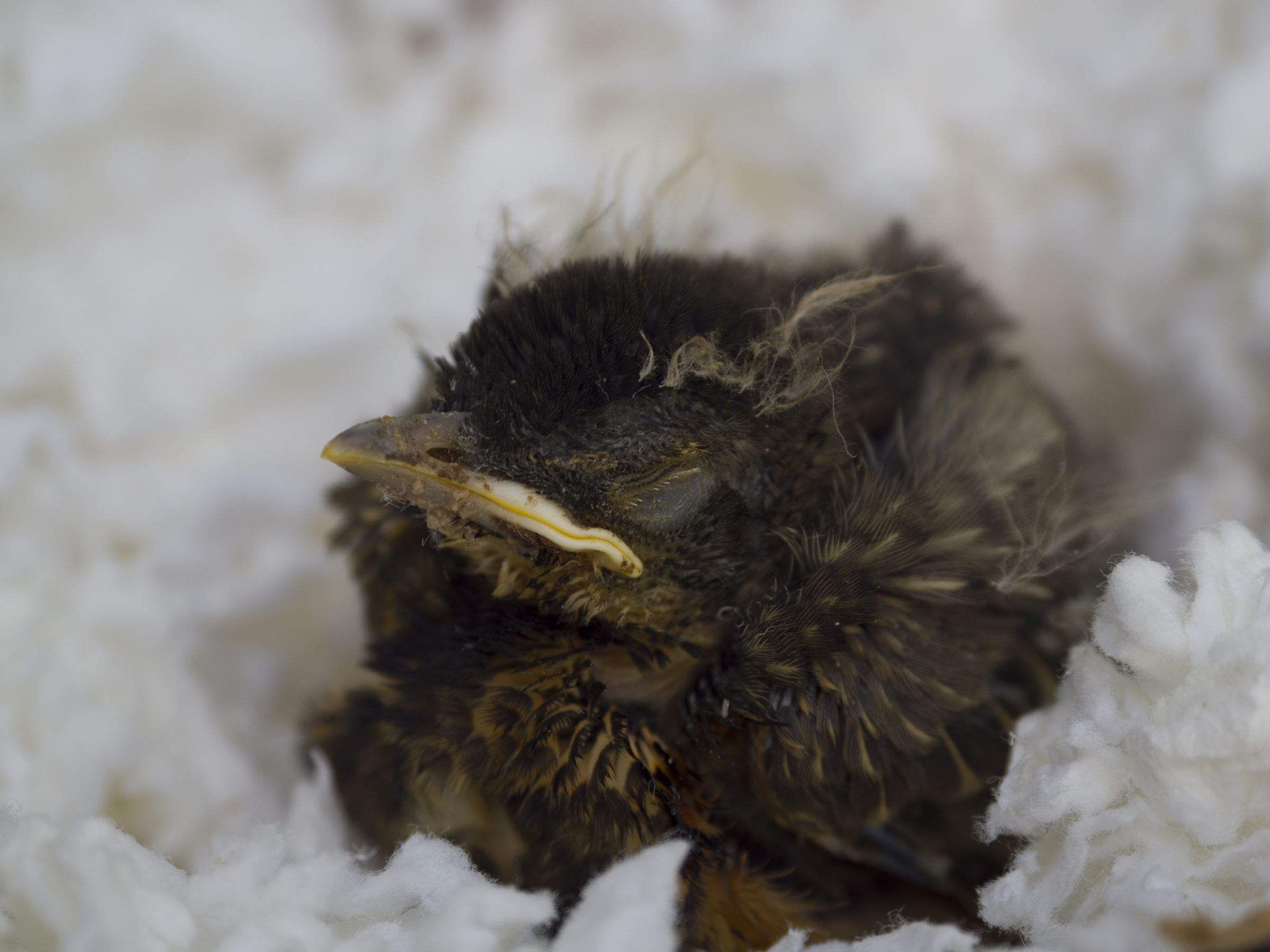
A few days ago, a tiny American robin nestling arrived at my girlfriend Joy’s veterinary clinic. Small enough to fit in the palm of a hand; mostly bare skin and oversized need. One of those creatures that looks impossibly fragile, as if nature shipped it before final assembly was complete.
We named this little one Pip; short for Pippin, because I have loved The Lord of the Rings for as long as I can remember, and it felt like the right name for a small creature with far more spirit than size.
The plan at first was simple; stabilize, feed, keep warm, and hope.
Wild bird rescue is often an exercise in measured optimism. Tiny bodies can turn quickly in either direction, and there is a very real uncertainty in those first hours. You do what you can, keep the environment calm, watch carefully, and let biology do what biology has spent millions of years learning to do.
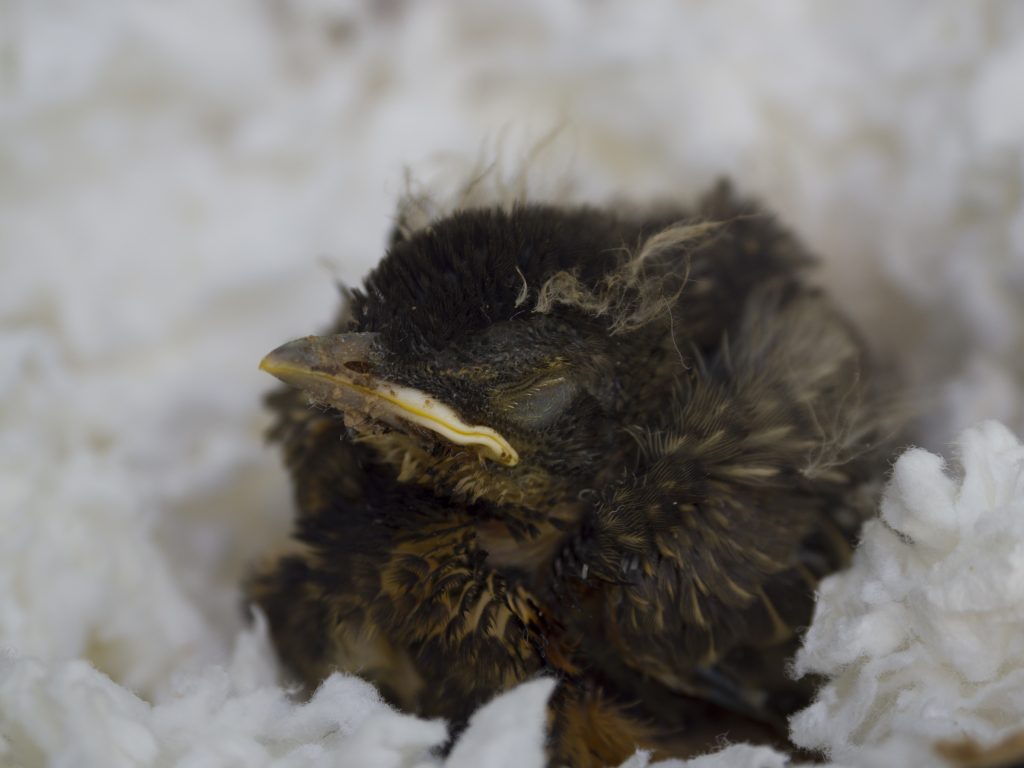
Pip as a nestling. I had no idea that this little critter would double in size in less than 60 hours.
At first, Pip was little more than appetite and instinct.
A tiny neck would stretch impossibly high, mouth opening wide on command whenever food was near. If you have never hand-fed a nestling, it is hard to explain the surreal mechanics of it. There is this immediate, prehistoric response. A movement, a sound, a cue; suddenly this little featherless dinosaur launches into action with absolute conviction that food must be delivered immediately.
That became our cycle.
Warm Hill’s a/d critical care food mixed with water. A carefully improvised feeding tool – aka, a syringe. Frequent feedings. Constant observation. Then sleep.
Deep, total, instant sleep.
It became a repetition so efficient it almost felt mechanical. Wake up. Demand food. Receive food. Power down.
At first, every small change felt monumental.
The beak color shifted.
The strange papery feather sheaths began to open.
Wing movements grew stronger.
The awkward stillness of a nestling slowly gave way to intent.
Then came one of the more incredible transitions to witness; fledgling development.
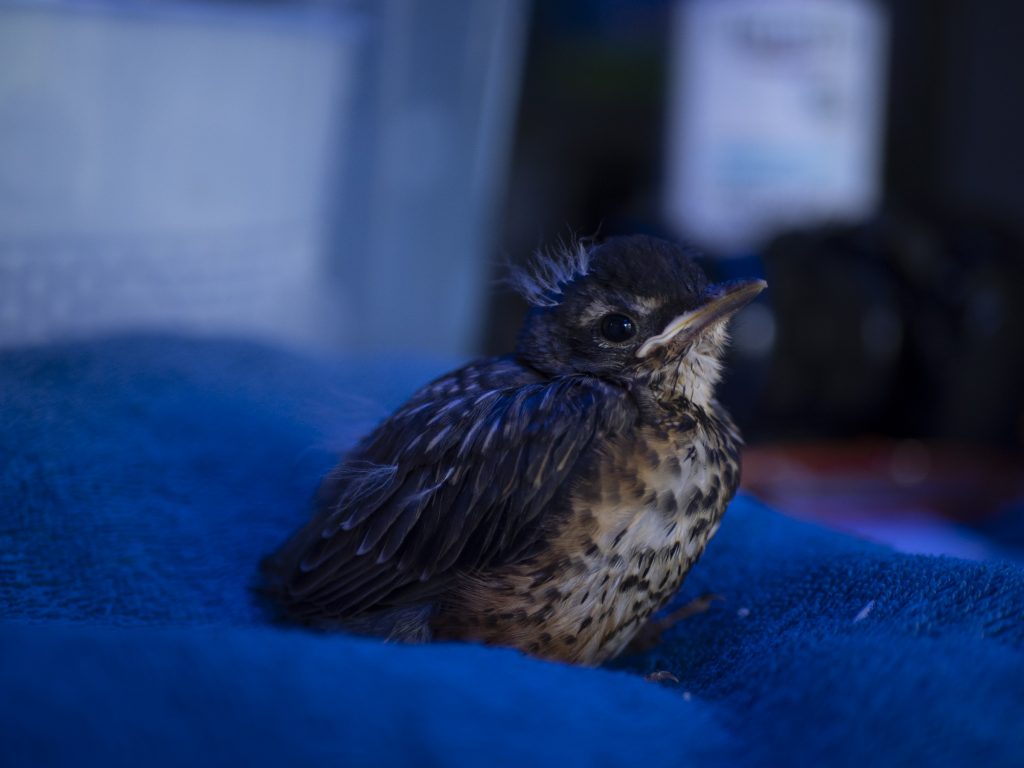
When Pip flew (wing-assisted hop, more like) out of her nest, I put a towel down for her to stand on.
If you have never watched a robin move from nestling to fledgling, it happens with startling speed.
One day they are little more than instinct and dependency.
The next, they are standing taller, preening constantly, balancing with surprising confidence, and testing the boundaries of gravity.
Pip recently made that leap.
First came the edge of the nesting box.
Then a short flight.
Then an intentional landing on my arm.
That was the moment it really hit me.
This was no longer a fragile rescue patient.
This was a robin becoming a robin.
Even now, Pip is in that wonderfully awkward transitional stage. Head feathers stand up in little electric halos while preening. The remnants of feather capsules drift through the air like tiny flecks of snow. Every few hours there seems to be some new developmental milestone.
A stronger perch.
A more deliberate hop.
A cleaner landing.
A little more confidence.
American robins are one of North America’s most familiar songbirds, though many people know surprisingly little about them.
The American robin, Turdus migratorius, is a migratory thrush found throughout much of the United States and Canada. Adults are recognized by their warm orange-red breast, dark head, and upright, alert posture. They are highly adaptable birds and are common in suburban neighborhoods, parks, forests, and open lawns.
They are also remarkably fast developers.
Robin nestlings typically remain in the nest for around 13 to 14 days after hatching. Once they enter the fledgling phase, they often leave the nest before they are truly skilled fliers. For several days, fledglings spend time on low branches or even the ground while they build flight control and coordination.
To many people, this looks alarming.
In most cases, it is completely normal.
The fledgling stage is essentially flight school.
A lot of awkward launches.
A lot of clumsy landings.
A lot of determined persistence.
That is exactly where Pip is now.
Watching this unfold up close has been a reminder of how extraordinary ordinary wildlife really is.
The American robin is so common that it is easy to overlook.
We hear them in spring.
We see them hunting worms across suburban lawns.
They become part of the visual background of life.
But when you witness the process from this close, when you see each stage unfold hour by hour, it becomes impossible not to appreciate just how astonishingly complex and beautifully engineered these little birds are.
Soon enough, Pip will be fully feathered, stronger in flight, and ready for the next step toward independence.
That has always been the goal.
Not to keep a bird.
Not to tame it.
Just to help it bridge this fragile early chapter and become what it was always meant to become.
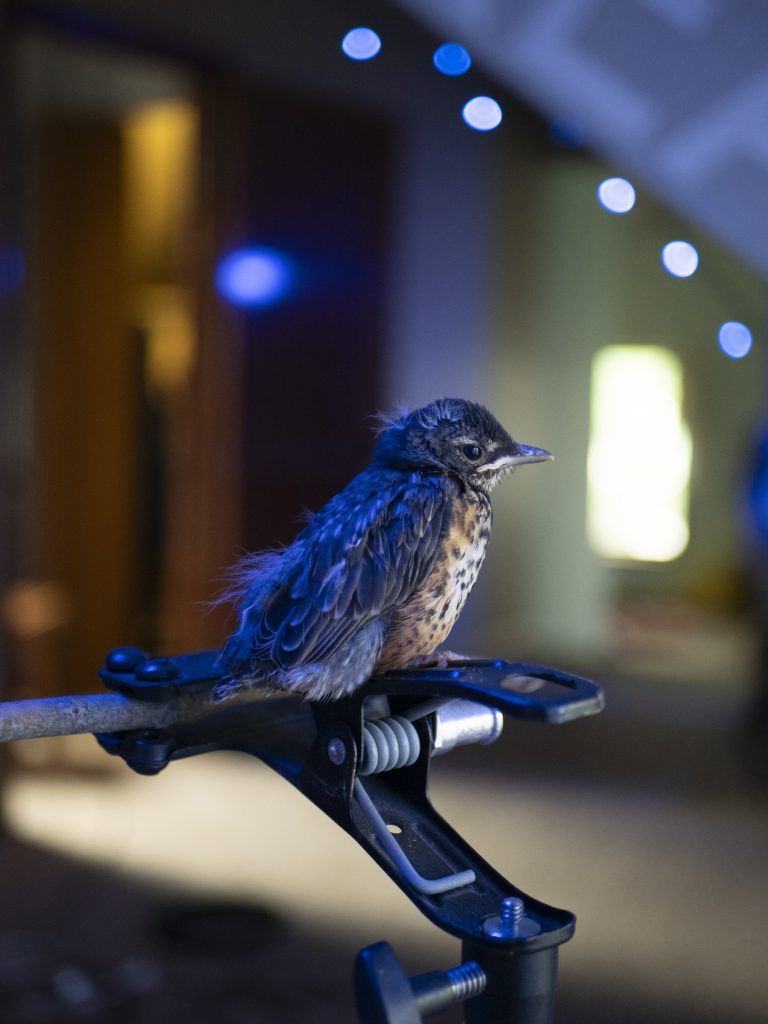
Even though I’ve offered her a strong branch to perch on, she prefers the Justin Clamp.
For now, though, Pip still has the habit of spotting me across the room, standing up on those tiny performer legs, and making it very clear that room service is expected.
And honestly, I am okay with that.