

The Wetmore Trail
Sometimes the most memorable hikes aren’t the ones with the biggest waterfalls or the grandest overlooks. Sometimes they’re the ones that leave you thinking long after you’ve left the trail.
A Different Kind of Trail
Every trail has its own personality.
Some immediately announce themselves. Mohican greets you with suspension bridges, waterfalls, and dramatic sandstone gorges. Brandywine Falls rewards you with one of Ohio’s most recognizable landscapes almost as soon as you arrive.
The Wetmore Trail doesn’t do any of that. Instead, it quietly exists in the northern reaches of Cuyahoga Valley National Park, branching off toward Robinson Field with connections to the Salt Run Trail and the Virginia Kendall area. It’s the kind of trail that doesn’t appear on many “must hike” lists, yet somehow everybody local seems to know exactly where it is. When I arrived, I wasn’t feeling particularly energetic. It wasn’t one of those mornings where you step out of the car convinced you’re about to conquer the world. Quite the opposite. My legs already felt heavy before I’d even started walking, and mentally I wasn’t carrying the same excitement I’d had on some of my previous hikes. Still, experience has taught me that some of the best days outdoors begin exactly like that.
Sometimes the trail changes your mood. Sometimes it doesn’t. Either way, it’s worth finding out.
The Wetmore Trail loop covers 5.0 miles, climbs roughly 551 feet, and took me 1 hour and 43 minutes to complete. I skipped the connecting trails toward Virginia Kendall and Salt Run, choosing instead to stay on the main Wetmore loop from beginning to end.
The Drive Is Part of the Experience
One of the things I love most about Cuyahoga Valley National Park is that the experience begins long before you step onto the trail.
Driving through the park is always relaxing. Some stretches wind past beautiful historic homes that seem perfectly at home among the mature trees, while others leave civilization behind almost entirely. Wetmore Road falls into that second category. By the time I reached the trailhead, I already felt removed from everyday life. There were no busy intersections, no shopping centers, no reminder that Cleveland and Akron were only a short drive away.
It was just forest. Even the parking lot somehow fit the mood. There’s nothing flashy about it. It’s not particularly large, nor does it have the grand entrance of a major national park visitor center. It’s simply a well-kept parking area tucked beside the road.
For some reason, I liked that. It felt understated. Like the trail wasn’t trying to impress anyone before you’d even taken your first step.
Walking Through the Portal
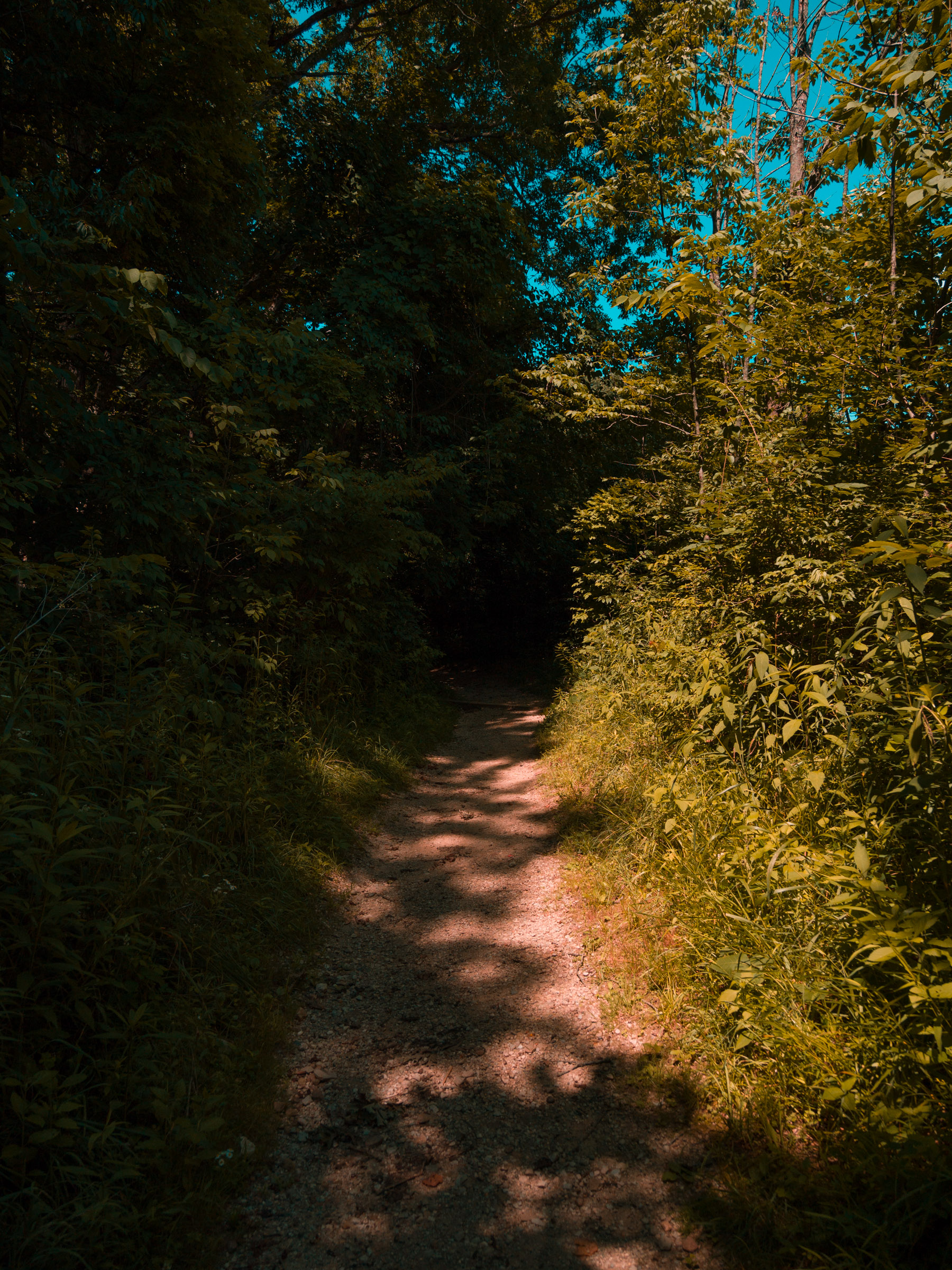
The portal to Wetmore.
The first impression of the Wetmore Trail is one I won’t forget.
Standing in the parking lot, the sky is completely open above you. Sunlight fills the space, and you can still see the surrounding trees individually rather than as one continuous forest.
Then you reach the trailhead.
Almost immediately, the canopy closes overhead.
The bright parking lot disappears behind you, replaced by a tunnel of leaves so dense that the trail seems to vanish into darkness. It genuinely felt like stepping through a portal into another world. One moment I was standing beneath an open Ohio sky. The next, I was walking beneath a ceiling of green where the path simply disappeared into shadow.
I loved that feeling.
It was mysterious without being intimidating.
Inviting without giving away what waited ahead.
Descending Toward Dickerson Run
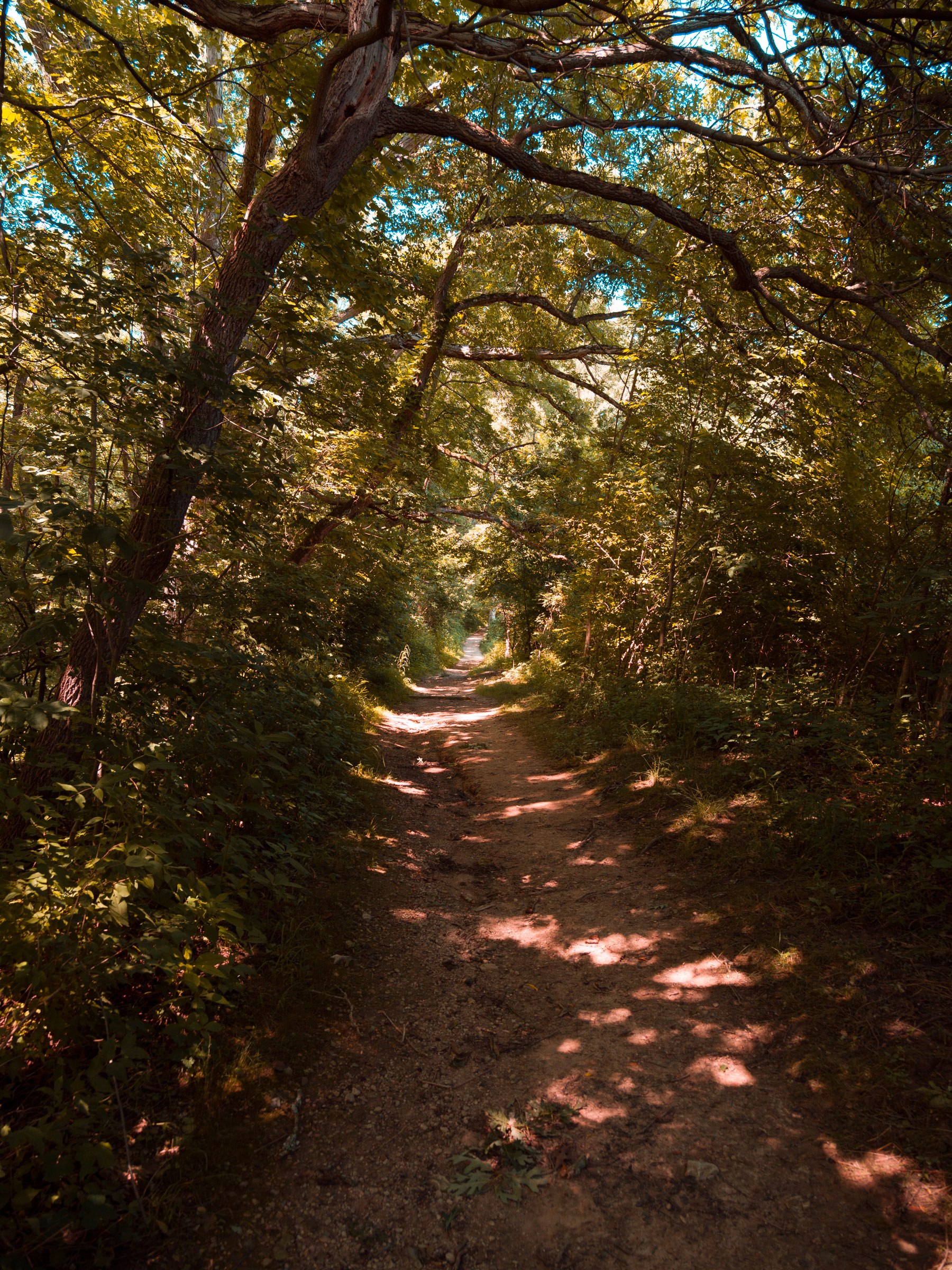
Descent.
The first thousand feet of trail gradually descend toward Dickerson Run, dropping somewhere between fifty and one hundred feet as the forest quietly wraps itself around you.
Even though the canopy overhead was thick enough to block most of the direct sunlight, I noticed something unusual almost immediately.
Instead of the typical bare forest floor, much of the understory was filled with waist-high grasses. It created an interesting blend of woodland and meadow that I don’t remember seeing on many other hikes. You were clearly walking through dense forest, yet the ground beneath the trees felt unexpectedly alive and open.
The deeper I walked, the louder the sound of moving water became. I’d looked at the map before leaving home and had already decided that I wanted to spend some time following Dickerson Run. Creeks always have a way of pulling me in. They’re full of small photographic details, changing light, and little surprises hiding around every bend.
When I reached the first fork in the trail, my decision had already been made. I turned right. The farther I walked toward Dickerson Run, the more excited I became.
Unfortunately, Dickerson Run wasn’t quite what I’d imagined. Instead of the kind of creek you can comfortably follow along its banks, I found a narrow, muddy ribbon of water only a few feet across. It was heavily overgrown, the banks were soft with mud, and while it certainly could have been explored, it was the sort of place that required waders, extra time, and a willingness to bushwhack through dense vegetation.
I had come prepared to hike beside a creek – I wasn’t quite prepared to invent a trail through ankle-deep mud. So, with only a slight sense of disappointment, I crossed the run and continued along the main trail. Truthfully, it didn’t bother me very much. The creek hadn’t turned out to be what I’d expected, but I was still somewhere completely new. I still wanted to see what was around the next bend.
Besides… The day had already surprised me once. It wasn’t done yet. And then, curiosity got the better of me – a small opening just off the trail looked like it might lead to an interesting photograph. Unfortunately, it led to something else entirely.
Curiosity Doesn’t Always Pay Off
As I continued along the trail, I noticed a small opening disappearing into the woods. It looked like the kind of place that might reveal an interesting composition or perhaps another view of the creek.
Curiosity got the better of me. I stepped off the main trail and wandered into the clearing. Within seconds, I discovered that someone else had apparently decided it was an ideal place for an improvised bathroom. Complete with the unmistakable evidence and a generous amount of abandoned toilet paper, it wasn’t exactly the photographic opportunity I’d been hoping for. Needless to say, I made a quick retreat back to the main trail. Sometimes nature reminds you that not every discovery is worth making.
A Forest That Couldn’t Decide What It Wanted to Be
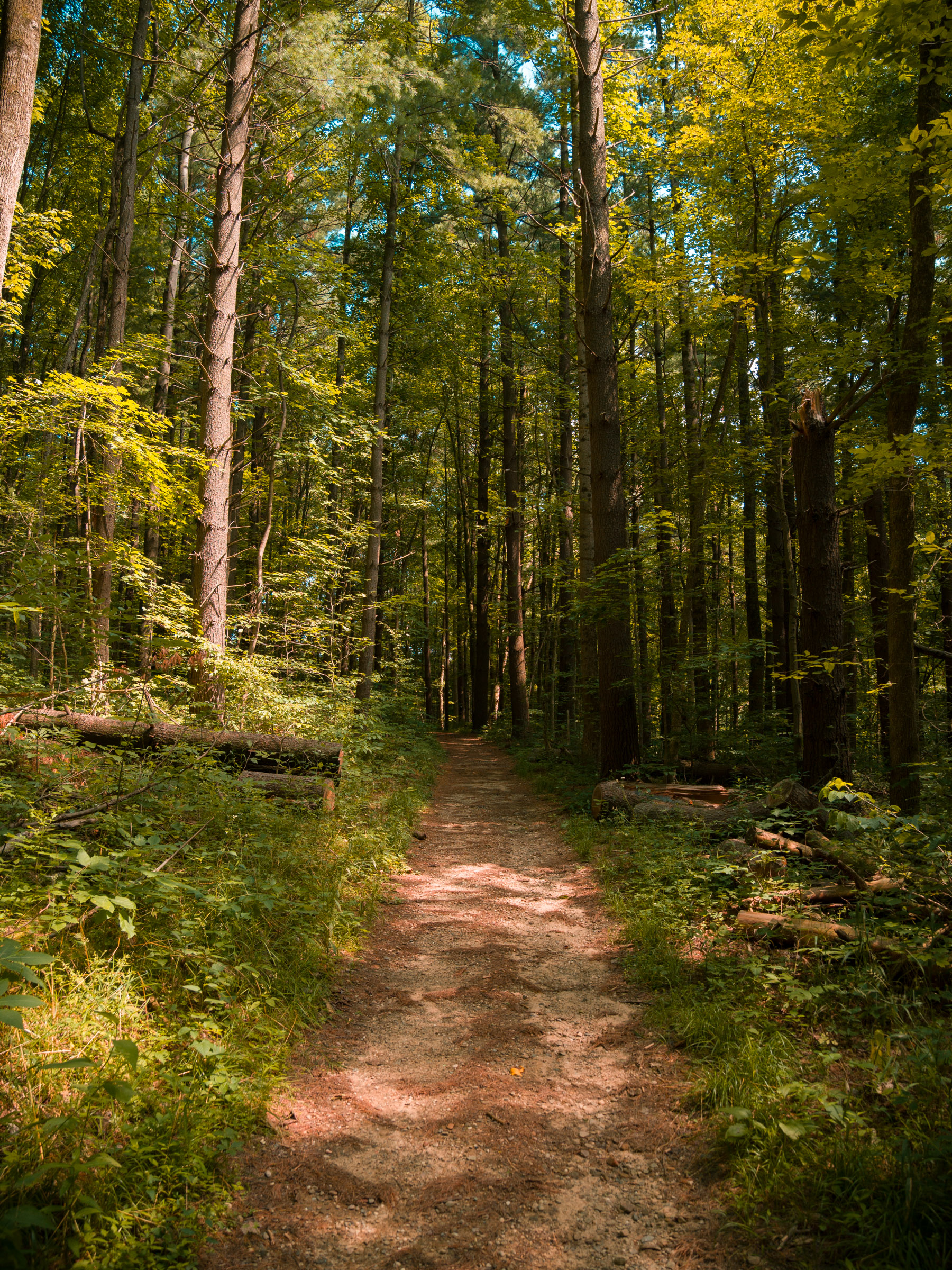
A clearing of pines will sometimes appear in a seemingly random section of the trail.
After crossing Dickerson Run, I settled back into the rhythm of the hike. This was where the Wetmore Trail really began showing me what it was about.
The trail constantly changed character. One moment I was walking beneath a dense canopy of mature hardwoods where very little sunlight reached the forest floor. A few hundred yards later, the woods would suddenly open into patches of waist-high grasses that almost felt like miniature meadows tucked beneath the trees. Then, just as quickly, the trail would weave back into thicker forest again.
It never became repetitive.
It simply kept changing.
Ferns began appearing in greater numbers. Fallen trees lay scattered throughout the woods, many of them covered in thick carpets of emerald moss. In places, the vegetation became dense enough that wandering off the trail no longer felt practical. Unlike some forests that almost invite exploration beyond the path, Wetmore seemed content guiding you exactly where it wanted you to go.
I actually appreciated that. There was a quiet confidence to it. The trail wasn’t trying to impress me. It simply existed.
Everyone Had Somewhere to Be
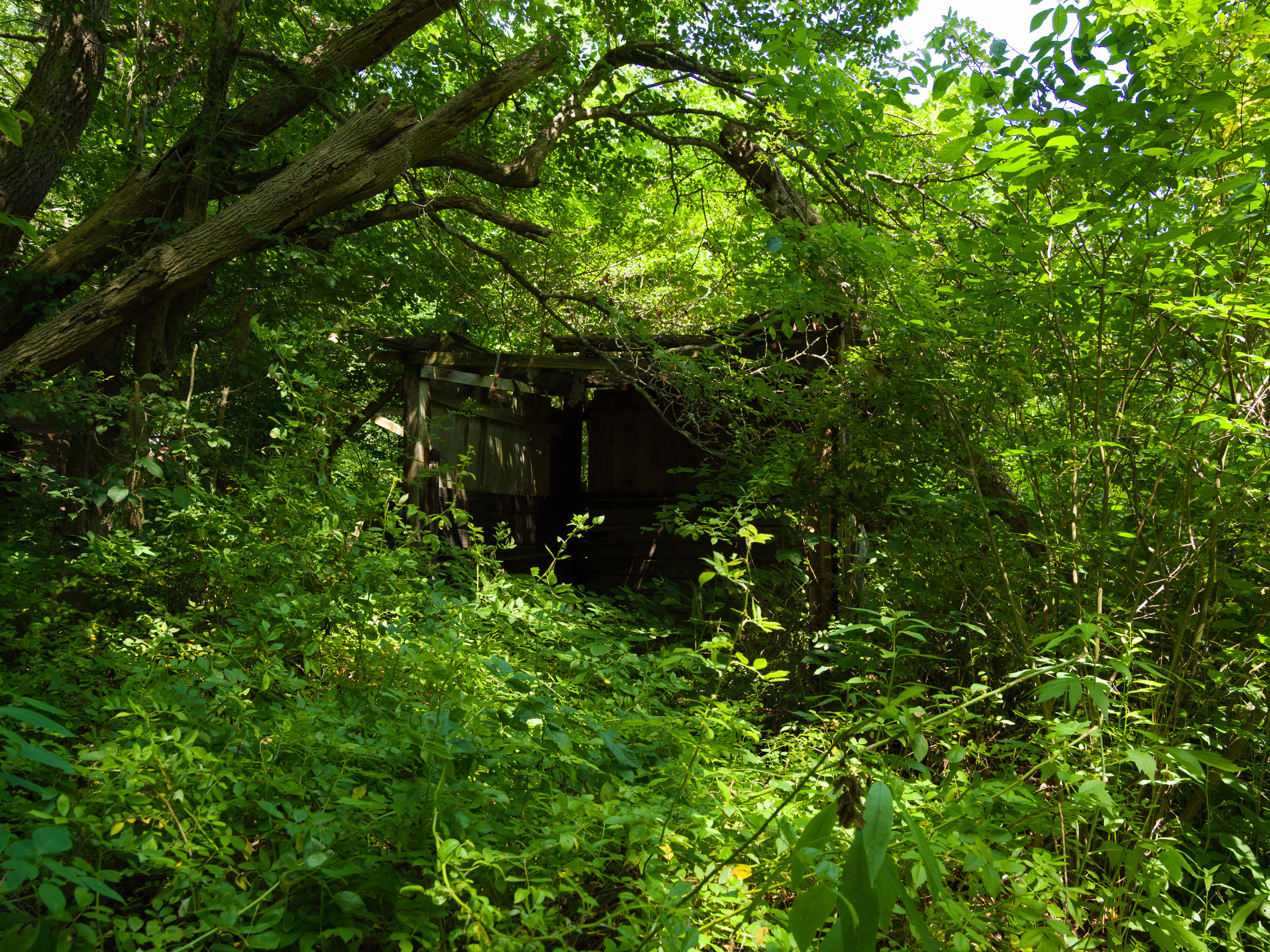
A weird shed rots away, absorbed by the forest.
As I continued deeper into the woods, I began noticing something else. I wasn’t meeting hikers. I was meeting runners. Groups of runners. People training. People exercising. People who clearly knew this trail far better than I did.
At first, I found it surprising. When I’d pulled into the parking lot that morning, it had been completely empty. I honestly thought I might have the entire trail to myself. Instead, it seemed as though everyone had quietly entered from somewhere else.
Later, I realized many were likely coming from the Virginia Kendall area and connecting into the Wetmore Trail system.
What struck me wasn’t that they were exercising. It was how differently we were using the same trail. I always make a point of smiling, saying hello, or at least acknowledging people I pass on the trail. To me, there’s something special about sharing a beautiful place with complete strangers for a brief moment. Most of the runners didn’t even look up. They weren’t rude, they were simply focused. This wasn’t an afternoon of wandering for them. This was Tuesday’s workout. That realization changed how I viewed the Wetmore Trail. Brandywine Falls is a destination. Mohican is an adventure. Wetmore felt like part of people’s routine. It wasn’t a place they visited. It was a place they belonged. Or rather, a place they felt belonged to them.
Where Exploration and Creativity Meet
As both a photographer and a hiker, I’ve realized those two passions aren’t separate pursuits. They’re intertwined. If I had to describe where they meet, I’d say it’s somewhere muddy, swirling with current and eddies, constantly pulling one into the other. Exploration inspires creativity. Creativity encourages exploration. Most of the time, I can’t tell where one ends and the other begins. Wetmore challenged that relationship.
From an exploration standpoint, I was having a genuinely good time. The trail kept changing. The forest remained interesting. Every bend offered something slightly different from the last. But creatively I was struggling.
Not because the trail wasn’t beautiful. Because it wasn’t speaking to me photographically. That distinction surprised me.
Usually, if I enjoy exploring a place, photographs almost naturally follow. Here, the two seemed disconnected. I kept seeing interesting environments without seeing compelling compositions. The forest was incredibly green. The canopy was so dense that the light became soft and even almost everywhere I looked. Under many circumstances that’s wonderful, but here it also meant there was very little contrast. Shadows were gentle. Highlights were muted. The entire forest existed in subtle variations of green. Everything blended together. I found myself raising the camera, composing a frame, and then lowering it again. Not because there wasn’t anything to photograph.Because I couldn’t quite find the story inside the frame.
It was an unusual feeling. For the first time in quite a while, I realized I was enjoying the experience more than I was enjoying the photographs I was making.
Cracked Stone
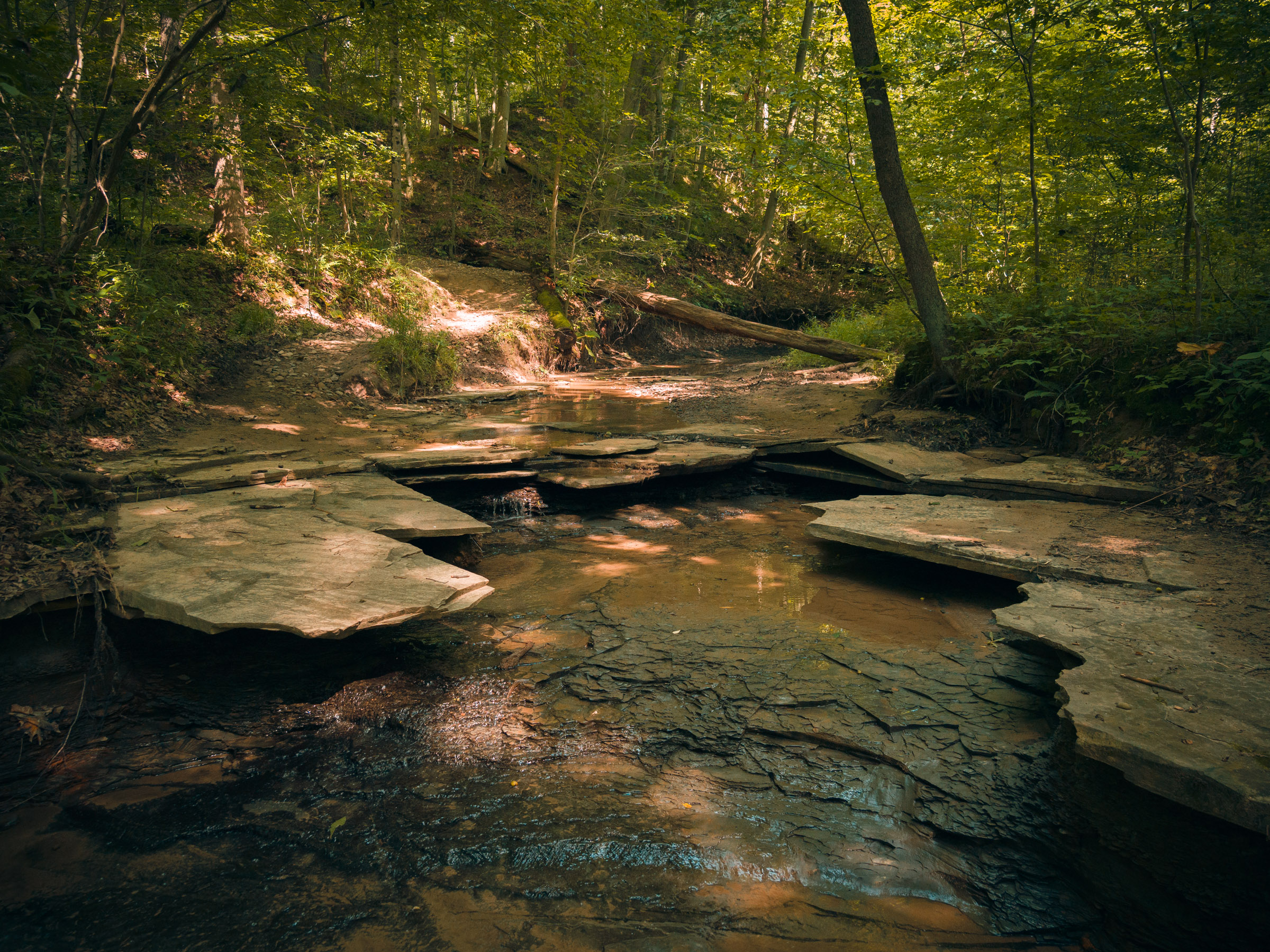
The surface of the old river bed floats above the new.
Nearly two miles after the second trail junction, the forest opened just enough to reveal one of the most interesting geological features of the day. Ahead of me, the creek had carved its way through layers of shale and sandstone, exposing what looked remarkably like a sheet of cracked ice frozen in place. Large stone plates jutted upward at odd angles where years of flowing water had slowly broken apart the old streambed. It was fascinating to explore.
I spent several minutes walking around the exposed rock, looking for interesting angles and trying to understand how the water had sculpted the landscape over time. I even made a few photographs. But, the same challenge remained.
The geology was genuinely interesting. The photographs weren’t. Not because the place lacked beauty. Because the light simply refused to give the scene much personality. For a photographer, that was strangely frustrating.
For an explorer… It was still worth every step.
The Nicest Guy on the Trail
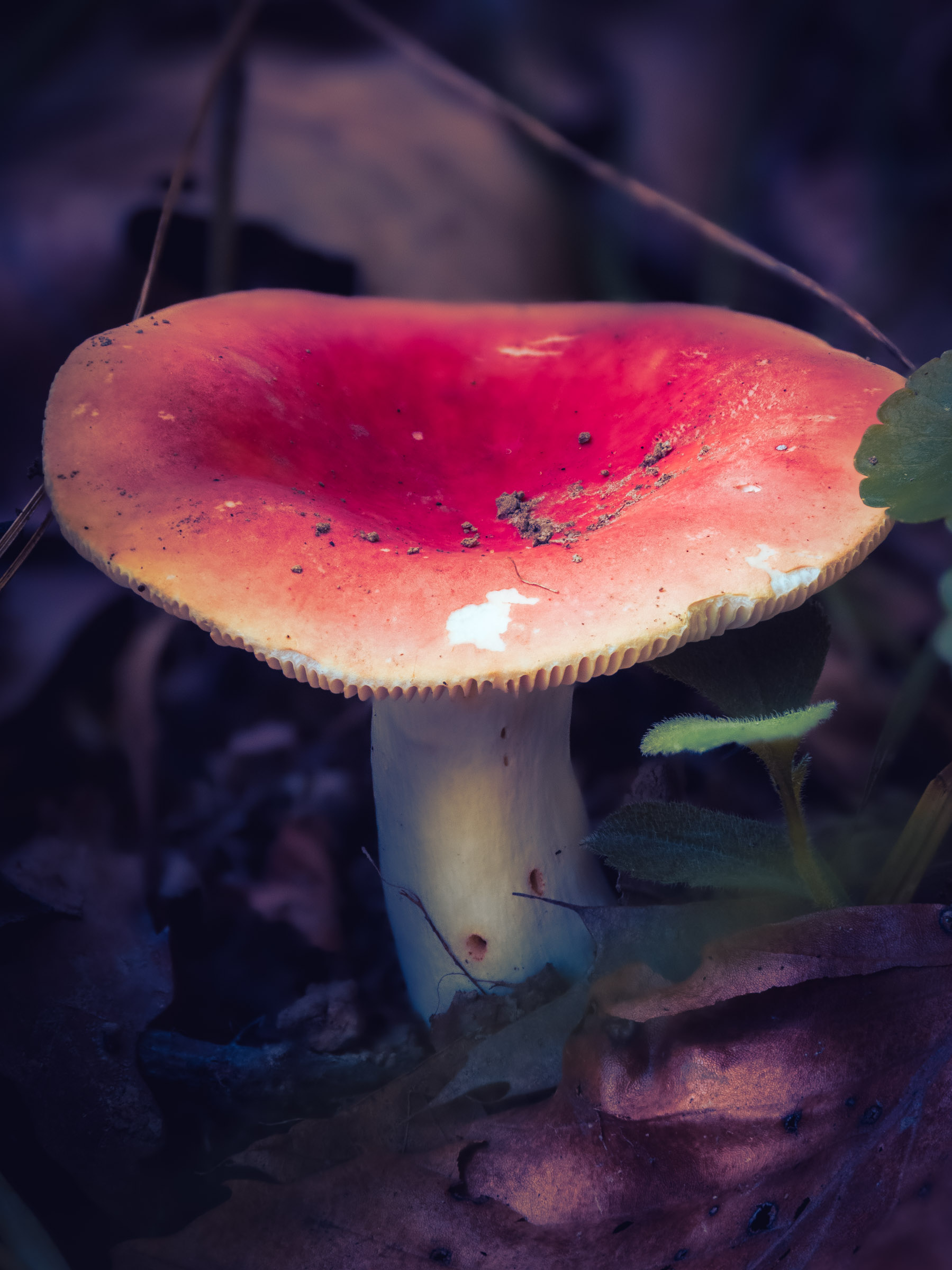 After leaving the exposed creek bed behind, I continued following the Wetmore Trail toward its final stretch. By this point, my legs were beginning to feel every bit of the five-mile loop. It wasn’t an overwhelming fatigue, but the kind that quietly settles in after you’ve been walking for well over an hour. The trail itself wasn’t becoming more difficult, but my energy certainly wasn’t becoming any greater.
The runners kept coming.
One after another, they appeared around bends in the trail, moving with a purpose that was almost completely different from my own. I smiled, stepped aside whenever necessary, and greeted everyone I passed. Most never looked up. A few offered a quick nod. Others remained completely locked into whatever pace or training plan had brought them there that day.
I don’t say that as criticism. In fact, it reinforced something I had been feeling almost since the beginning of the hike. Wetmore wasn’t a destination for most of the people using it. It was part of their routine. They weren’t there to wander, stop, or wonder what was around the next corner. They already knew what was around the next corner. They were there to run, exercise, improve themselves, and head home.
I was the odd one out.
Then, almost at the very end of the hike, I met the one person who completely broke that pattern. I happened to be kneeling beside the trail, photographing a mushroom growing from a fallen log, when I heard footsteps approaching. Looking up, I expected another runner dressed head to toe in technical apparel. Instead, here came what looked like a guy who had wandered away from a hardware store.
He was wearing heavy duck-cloth Carhartt pants, a faded T-shirt, a well-worn trucker hat, and shoes that certainly weren’t the latest trail-running model. His hair looked like it had been introduced to a brush several weeks ago, and if you’d told me he was Shaggy from Scooby-Doo, I probably wouldn’t have argued with you.
As he ran past, he slowed just enough to smile. “Hey, man! How are you doing? Have a great day!” That was it. Five seconds, maybe.
But somehow, after nearly every other interaction that day had been quiet, hurried, or almost nonexistent, that simple greeting became one of the most memorable moments of the entire hike.
Sometimes the person who looks least like they belong somewhere turns out to be the friendliest one there.
Good Gear Lets You Forget About It
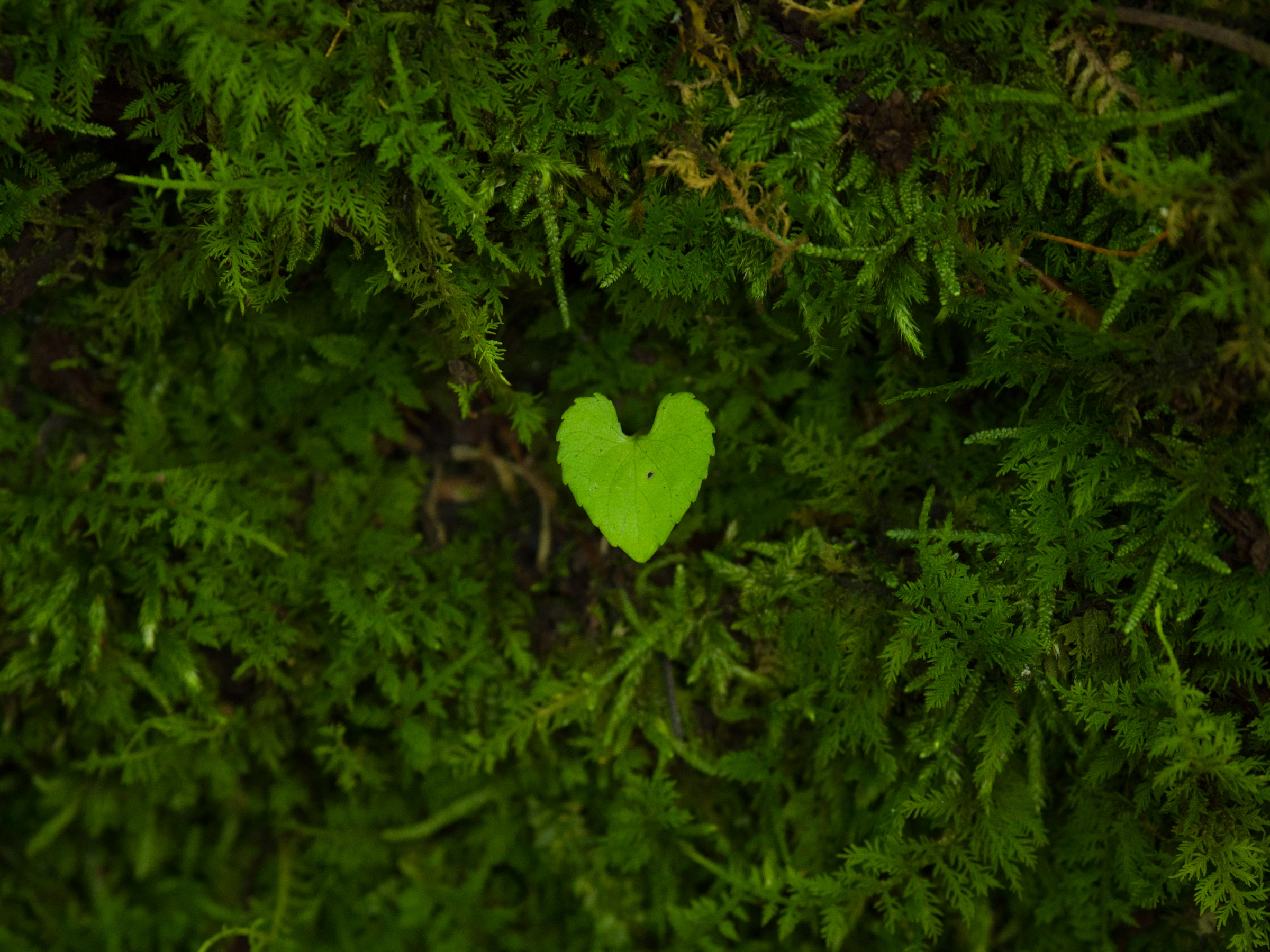
Moss with a heart on.
One thing I never had to think about during the hike was my gear, and that’s probably the highest compliment I can give it.
For Wetmore, I left my larger Osprey pack at home and carried my North Face Borealis instead. It’s more than capable of handling a day hike, easily swallowing my camera gear, snacks, water, and the handful of essentials I never leave behind.
I’ll admit something that’s probably a little shallow – I absolutely love the color. It’s one of those deep, rich blues that somehow manages to make me smile every time I pull it out of the closet. Does the color make it a better backpack? Of course not. Do I still enjoy carrying it because of that color? Absolutely.
Sometimes it’s okay to appreciate something simply because you think it looks beautiful.
Inside the pack was my OM SYSTEM OM-1 Mark II, which has become my constant hiking companion. Even on a day when I struggled to find compelling compositions, I never regretted bringing it. Photography isn’t simply about coming home with great images. Sometimes it’s about learning why certain places inspire you differently than others, and that lesson is just as valuable.
On my feet were my trusted Keen Jasper shoes. Wetmore isn’t an especially technical trail, and a good pair of trail runners would probably handle most of it without much trouble. Even so, the combination of damp clay, exposed roots, rolling terrain, and occasional rocky sections reminded me why I appreciate shoes with excellent grip. They quietly did their job all day, which meant I could focus on the trail instead of worrying about my footing.
The only real mistake I made was on top of my head – I wore my Carhartt beanie.
Now, anyone who knows me knows I wear beanies almost year-round. I’m usually perfectly happy wearing one long after everyone else has switched to baseball caps.
Ninety degrees with heavy humidity, however, finally exposed the flaw in that strategy. By the first half of the hike, I was essentially wearing a wool sauna. Sweat poured off my forehead, and I found myself laughing at my own stubbornness. I own several hats that would have been far more sensible choices that day.
Sometimes experience isn’t about learning something profound. Sometimes it’s simply learning not to wear a knit cap in the middle of July.
A Trail That Didn’t Quite Connect
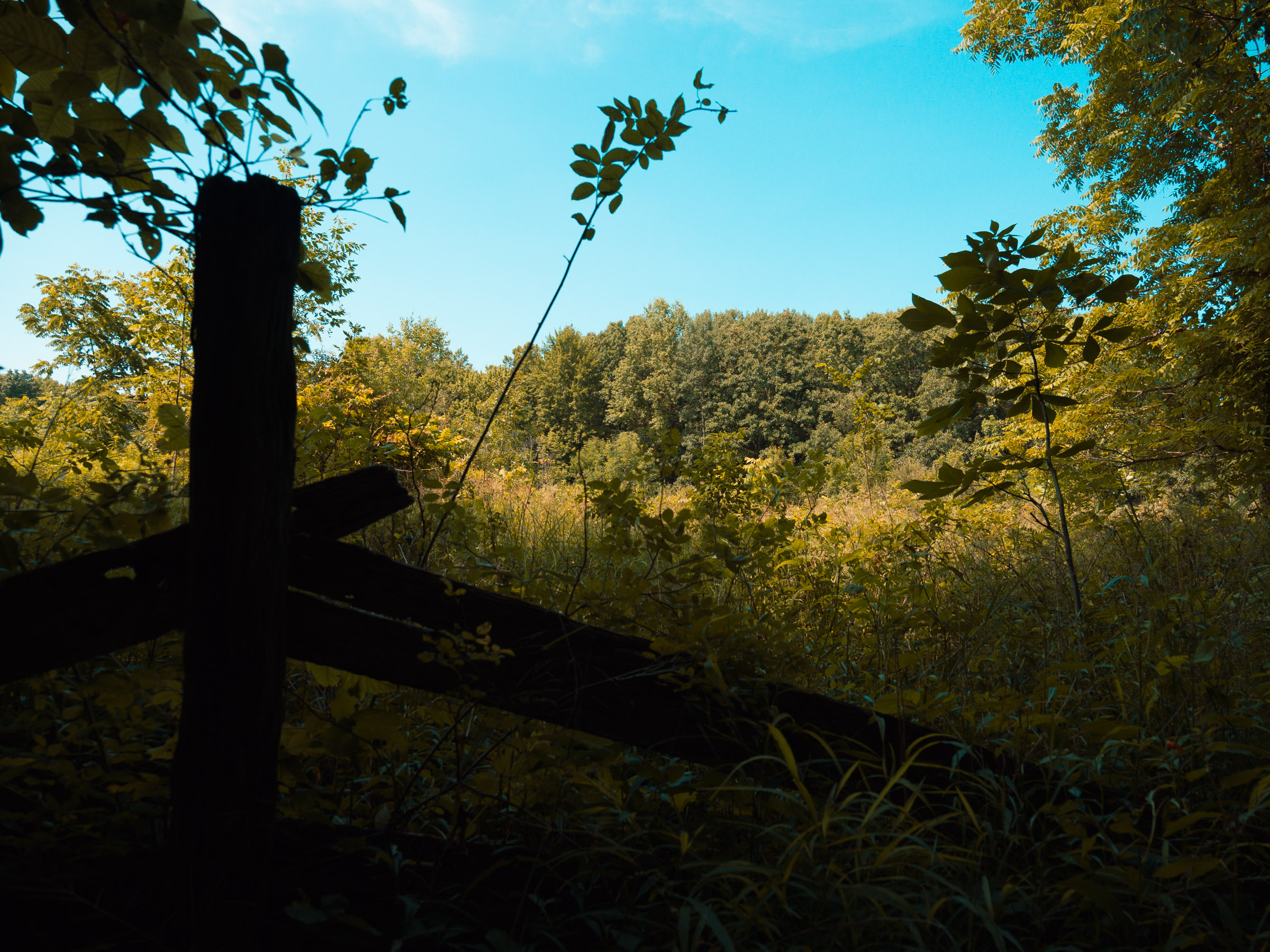
Looking out at the meadows from the shadows of the trail.
As the miles continued slipping beneath my feet, I finally understood what had been bothering me throughout the day.
Wetmore hadn’t disappointed me. It simply hadn’t connected with me. Those aren’t the same thing.
From an exploration standpoint, I genuinely enjoyed myself. The forest constantly changed. The terrain rolled gently through valleys and beneath mature hardwoods. Moss covered fallen trees. Ferns crowded the understory. Every now and then the canopy opened just enough to completely change the atmosphere before closing in again.
The trail was doing exactly what it was supposed to do. But creatively… I never quite found my rhythm.
For me, hiking and photography have always existed together. One naturally feeds the other. Exploration sparks curiosity, curiosity becomes photographs, and the photographs become part of the memory of the hike itself. Wetmore interrupted that cycle.
It wasn’t because the forest lacked beauty. Quite the opposite. It simply presented itself in a way that didn’t resonate with the kind of images I naturally look for. The light remained soft and even beneath the canopy, the dominant greens rarely gave way to stronger contrasts, and I often found myself admiring a scene much more than I enjoyed photographing it.
That realization stayed with me for the rest of the hike. Sometimes a place can be wonderful to experience… without becoming a place you love to photograph. And maybe that’s okay.
Returning to Robinson Field
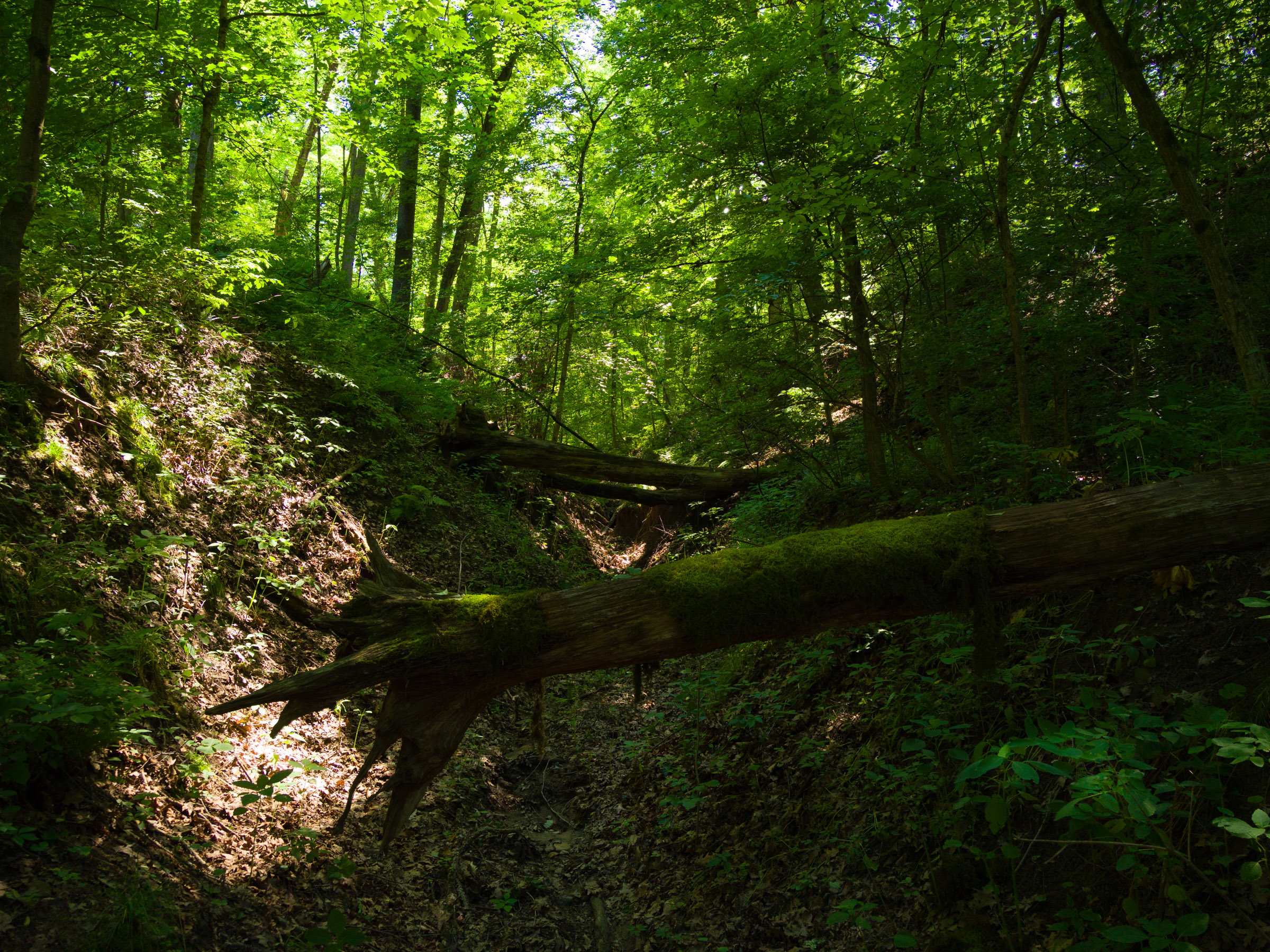
A tree falls and lays suspended above a small ravine.
Eventually, the trail began leading me back toward the original fork where I’d started the morning. By then, there weren’t any more decisions to make. The exploration was over, and all that remained was the familiar climb back toward the trailhead. It wasn’t a difficult climb. Objectively speaking, gaining fifty or sixty feet of elevation isn’t much.
Subjectively… After five miles, it can feel like a mountain.
By that point, my legs were tired, but more importantly, my mind was tired. Looking back, I think that’s what made the hike feel longer than it actually was. Inspiration has always been a powerful motivator for me. It’s almost like a slow-release version of adrenaline. Adrenaline gets you somewhere quickly before disappearing just as fast. Inspiration isn’t nearly as explosive, but it quietly carries you forward mile after mile without you even realizing it.
On this particular day, I never quite found that inspiration. The Wetmore Trail simply wasn’t giving it to me. That doesn’t make it a bad trail. It just means we weren’t on the same page.
As I climbed back through the same tunnel of trees that had welcomed me earlier that morning, the dense canopy slowly began to thin. The darkness gave way to sunlight, the forest opened overhead, and before I knew it, I had stepped back through that same natural portal where the hike had begun.
Only this time, everything looked different.
When I arrived that morning, the parking lot had been completely empty. Standing there alone with nothing but blue sky overhead and the trail disappearing into the woods, I remember feeling excited about the day ahead. There was that wonderful sense of possibility that every new trail offers, where you have absolutely no idea what you’re about to experience.
Now the parking lot was full. Cars lined nearly every available space, and people were arriving just as I was getting ready to leave.
Oddly enough, it felt appropriate. The parking lot had changed just as my day had changed. I had arrived full of optimism and curiosity, convinced I was about to discover another favorite trail in Cuyahoga Valley National Park.
Instead, I discovered something else.
Final Thoughts
Not every hike has to become your favorite.
In fact, I think it’s important that some don’t.
If every trail left me feeling exactly the same way, eventually they’d all begin blending together. Wetmore didn’t do that. It challenged my expectations. It forced me to think about why certain places inspire me creatively while others inspire me in completely different ways.
That’s a valuable lesson.
One thing I often say is that my hikes are roughly a fifty-fifty split between exploration and photography. Those two passions usually overlap so naturally that I hardly notice where one ends and the other begins. On the Wetmore Trail, however, they drifted apart. The explorer in me had a wonderful afternoon. The photographer spent much of the day searching for images that never quite materialized.
And maybe that’s exactly what this trail was trying to teach me. Not every beautiful place is dramatically photogenic. Not every memorable hike ends with a portfolio-worthy image. Sometimes the reward is simply the experience itself. I’ll absolutely return to the Wetmore Trail. Not because I’m convinced I missed something. Not because I think I somehow hiked it incorrectly. I’ll go back because I want to give it another chance. Maybe in another season. Maybe after a snowfall. Maybe with a friend instead of hiking alone. Maybe on a day when my own energy is completely different. Sometimes a place deserves a second conversation before you decide whether you truly understand it.
The experience I had was real. It just wasn’t the experience I expected.
And honestly… I’m okay with that.
If anything, it reminded me that exploration isn’t always about finding spectacular scenery. Sometimes it’s about learning something new about yourself and the way you experience the outdoors.
The Wetmore Trail may not have become one of my favorite places to photograph. But it absolutely became one of the most interesting trails I’ve walked this year. And somehow, I have a feeling our conversation isn’t over yet.
Would I Hike It Again?
Yes.
Not because I’m trying to recreate this hike…
…but because I’m curious whether the trail has another story to tell.
Trail Summary
Trail: Wetmore Trail Loop
Location: Cuyahoga Valley National Park, Ohio
Distance: 5.0 miles (8.0 km)
Elevation Gain: 551 feet (168 m)
Moving Time: 1 hour, 43 minutes
Difficulty: Moderate
Starting Point: Robinson Field / Wetmore Trailhead
Gear Used
- Camera: OM SYSTEM OM-1 Mark II
- Lens: M.Zuiko 12-100mm f/4 PRO
- Backpack: The North Face Borealis
- Footwear: Keen Jasper approach shoes
- Lesson Learned: Leave the Carhartt beanie at home when it’s 90°F with heavy humidity.