

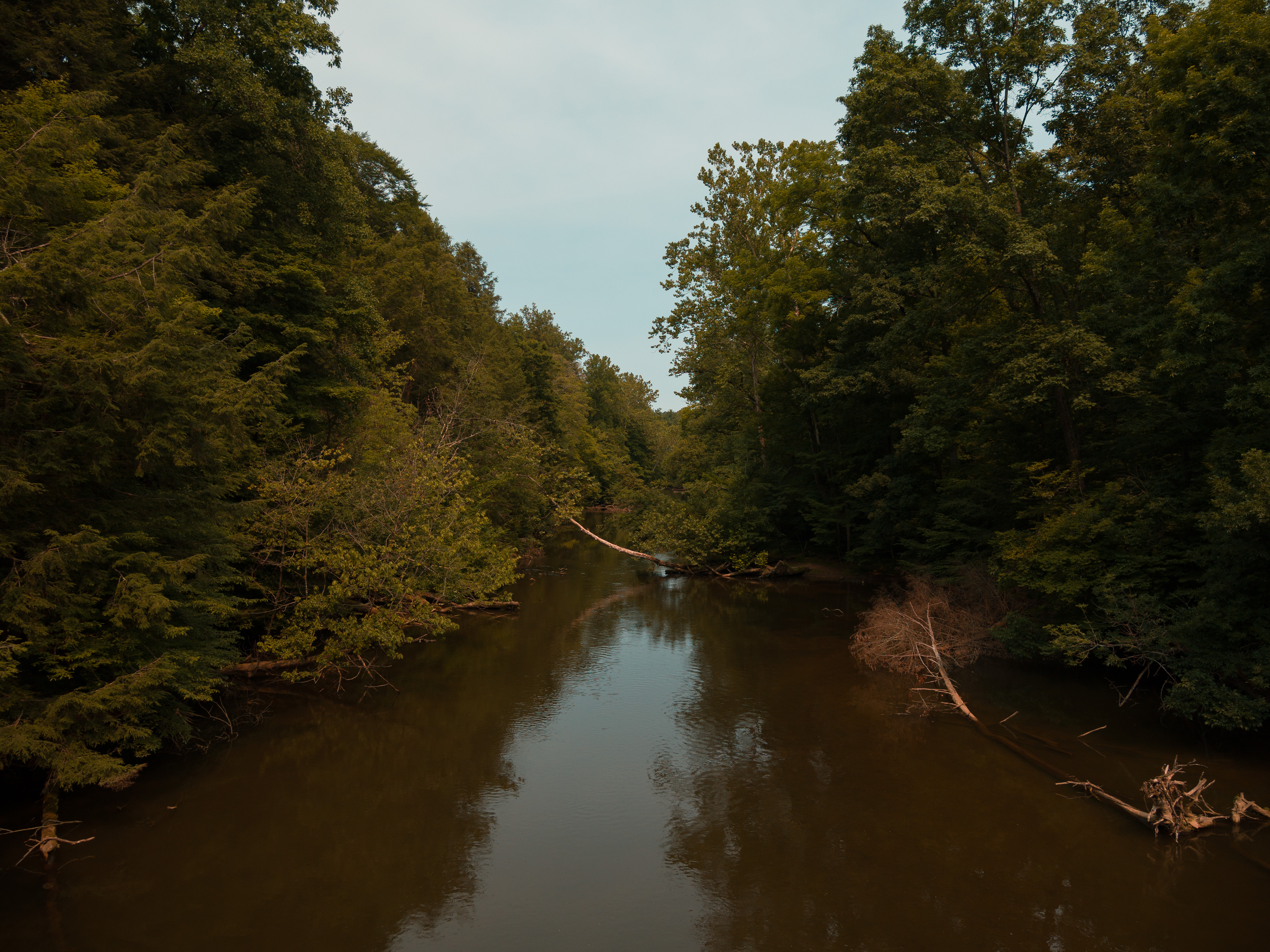
Hiking Mohican State Park
This 10-mile hike packs an incredible amount of scenery into a single day.
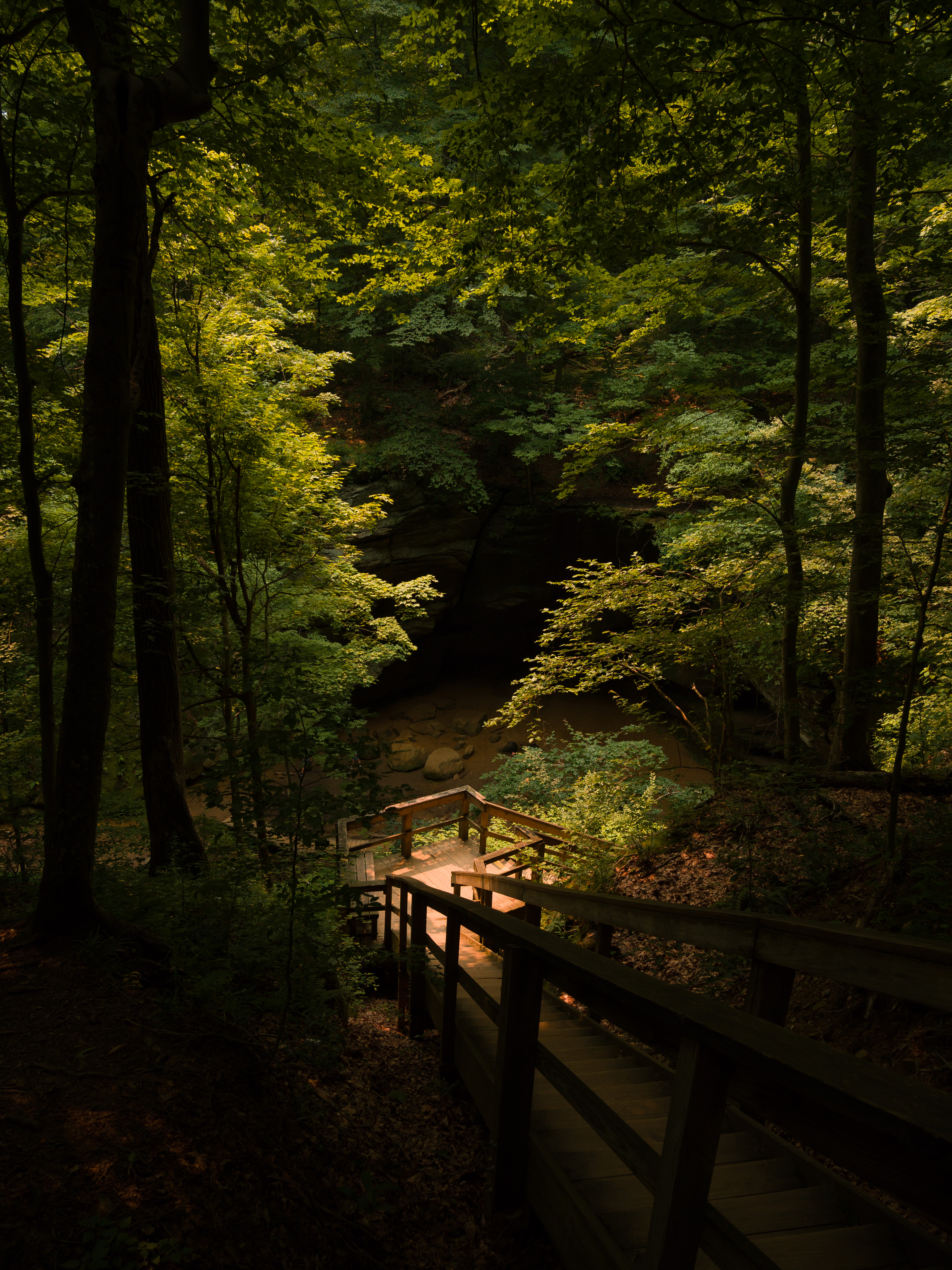
The stairway leading down to the Big Lyons falls, deep in the heart of Mohican State Park.
It starts by dropping you nearly 400 feet from the rim of a beautiful gorge to the valley floor below, where technical stretches of roots, rocks, and elevation changes keep the descent exciting. Once at the bottom, you’ll cross the Mohican River on a suspension bridge and spend the next several miles hiking alongside the water before reaching both Big Lyons Falls and Little Lyons Falls. The journey wraps up with a walk across the Pleasant Hill Dam and a steady climb back to the trailhead, making this one of the most memorable hikes in all of Ohio.
The hike begins before you’ve taken a single step.
Standing at the Gorge Overlook, you’re treated to a sweeping view across the valley below. It’s the kind of vista that changes dramatically with the seasons, giving visitors a completely different experience depending on when they arrive.
In winter, the bare trees reveal the winding Mohican River as it snakes through the valley floor. Come autumn, the forest erupts into a sea of brilliant reds, oranges, and yellows, transforming the landscape into what looks like a mountainside set ablaze. During our summer visit, however, the valley was completely alive with lush green foliage. Rolling hills disappeared beneath an unbroken canopy of leaves, while the afternoon sun filtered through the forest, bathing everything below in a soft, emerald-tinted light.
It’s a beautiful reminder that Mohican isn’t just one destination – it’s four completely different parks, depending on the season.
Choose Wisely
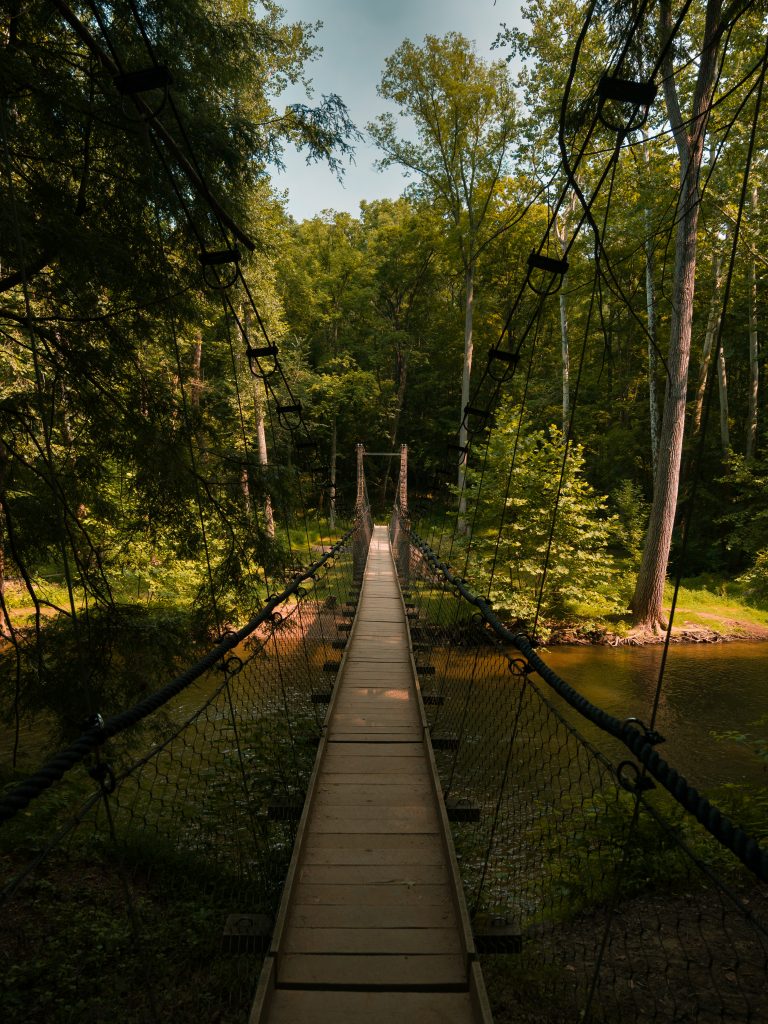
Choose your path wisely! One side may be a better fit for you. In either case, both paths converge at the suspension bridge that crosses the Mohican river.
One of my favorite things about this hike is that it gives you a choice almost immediately.
Standing at the overlook, you’ll notice trails heading both left and right. While they ultimately reconnect at the suspension bridge below, the experience couldn’t be more different.
If you’re looking for a challenge, head to the right.
This route wastes no time introducing you to Mohican’s more rugged side. The descent is steep, with wooden ladders built into the hillside to help hikers navigate the terrain. In several places, you’ll find yourself stepping down two- and three-foot rock ledges, using exposed tree roots as natural handholds. Even the dirt sections of trail are intentionally direct, often descending at surprisingly steep angles that demand your attention from the very first steps.
The left trail, on the other hand, offers a much more forgiving descent. It follows a gentler, switchback-style route down into the gorge, allowing you to lose the same elevation at a more comfortable pace. It’s still a beautiful walk, but one that’s a little easier on both your knees and your confidence if you’re new to hiking.
The nice part is that neither choice is permanent. Both trails begin at the parking area and meet at the suspension bridge along the Mohican River. If you’re short on time or simply want a shorter adventure, you can descend one side, cross the bridge, and climb back out using the opposite trail, creating an excellent loop without committing to the full 10-mile hike.
Taking the Steep Route
Since we planned on hiking the full 10-mile loop, choosing our route was easy. We decided to descend the right-hand trail, knowing we’d appreciate the gentler climb back to the parking lot via the left-hand trail at the end of the day. After ten miles on your feet, that gradual switchback ascent is a welcome reward.
The right-hand trail immediately earns its reputation.
The descent is steep, technical, and demands your attention from the very first few hundred yards. Wooden ladders help you negotiate the most vertical sections, while exposed sandstone, massive tree roots, and uneven terrain often require you to use your hands for balance. In several places, I found myself grabbing onto roots, rocks, and even the occasional tree trunk to steady myself as I worked my way down toward the valley floor.
Knowing that ahead of time, I came prepared.
A pair of thin, rubber-coated mechanics gloves proved to be one of the best pieces of gear I packed. They’re inexpensive, provide excellent grip on roots and rock, and let you confidently grab whatever the trail throws your way without worrying about scraped hands.
Summer hiking in Ohio also means preparing for the heat.
Even though much of the trail winds beneath a dense forest canopy, temperatures during our visit hovered around 90°F with humidity that reminded you exactly what Midwest summers are capable of. I wore a lightweight UPF 50+ sun shirt, which kept the direct sun off my skin during the more exposed sections without feeling any hotter than a short-sleeve shirt. At those temperatures, hot is simply hot, and I’d much rather have the extra sun protection.
Hydration was just as important.
I carried a two-liter CamelBak reservoir mixed with an electrolyte drink. Having cold water readily available without stopping to grab a bottle made it easy to sip constantly throughout the hike, and the added electrolytes were a welcome bonus on such a warm day.
Eventually, the steep descent levels out as the trail reaches one of Mohican’s signature landmarks – the suspension bridge.
I have to admit, I expected it to bounce and sway a lot more than it does. Instead, it’s remarkably solid and inspires confidence the moment you step onto it. It’s beautifully built, feels modern and well maintained, and offers fantastic views of the Mohican River flowing beneath your feet. More than just a way to cross the river, it’s one of those memorable features that gives the park its own personality and marks the beginning of the next chapter of the hike.
Along the Pleasant Hill Lake Trail
Once you’ve crossed the suspension bridge, turn west onto the Pleasant Hill Lake Trail. For the next 1.3 miles, you’ll follow one of the most peaceful and rewarding stretches of the entire hike.
This section constantly changes character. At times, the trail hugs the Mohican River, giving you unobstructed views of the water as it rushes over rocks below. A few minutes later, it gently pulls away into the forest, winding beneath towering hardwoods before eventually leading you back toward the river once again. That rhythm continues for much of the hike, and it never becomes repetitive.
No matter where you are, the river is always with you.
Even when it’s hidden behind the trees, you can hear the steady sound of moving water echoing through the valley. It becomes the soundtrack for this part of the journey.
If you’re hiking in the early morning or late afternoon, the light filtering through the trees is nothing short of spectacular. Long beams of sunlight cut through the forest, illuminating patches of moss, ferns, and fallen logs while leaving the rest of the woods bathed in cool green shade. Even during the middle of the day, the dense canopy does an excellent job of shielding hikers from the summer sun, making this stretch surprisingly comfortable despite the heat.
For photographers and nature lovers, this is one of those trails where it pays to slow down.
Mushrooms emerge from decaying logs, moss carpets the sandstone and tree roots, wildflowers appear in unexpected openings, and nearly every bend reveals another composition waiting to be photographed. More than anything, though, this section feels wonderfully untouched. It’s quiet, peaceful, and noticeably less traveled than the more popular areas near the suspension bridge and waterfalls.
That’s one of the biggest rewards of committing to the full 10-mile loop.
Many visitors experience only the park’s most famous landmarks before turning around, but those willing to continue are treated to one of the most tranquil and beautiful stretches of trail in all of Mohican State Park. The extra miles are absolutely worth it.
The Campground Stretch
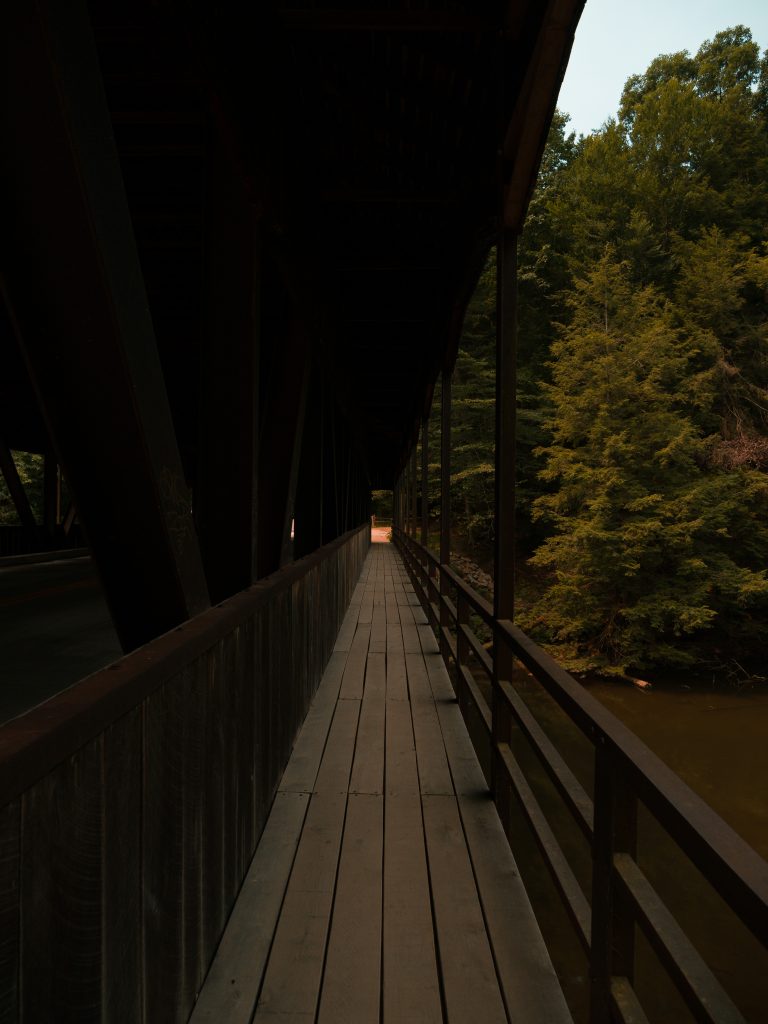
The covered bridge awaits you at the end of the campground.
After your hike through the woods on the Pleasant Hill Lake Trail, the forest gradually opens up as you emerge into the riverside campground. From here, you’ll follow the road and campground area for roughly three-quarters of a mile (about 0.75 miles) before reaching the historic covered bridge.
This is the most exposed section of the entire hike.
Unlike the shaded trails you’ve been enjoying, much of this stretch is out in the open. On cooler days it’s a pleasant walk, but if you’re hiking during the middle of summer, this is where you’ll feel the heat the most. During our visit, temperatures were pushing 90°F with heavy humidity, and the direct sun quickly reminded us that we’d left the protection of the forest canopy.
A wide-brimmed hat made a huge difference. I wore a North Face bucket hat along with a good pair of sunglasses, and both were worth every penny. They kept the sun off my face and neck and made this section far more comfortable than it otherwise would have been.
Our hike also happened during the Canadian wildfire smoke event, which created one of the most unusual lighting conditions I’ve ever photographed. The sky still appeared blue overhead, but the sunlight filtering through the smoke had a warm, orange cast that bathed the landscape in an almost cinematic glow. It was one of those rare moments where the atmosphere completely changed the mood of the scenery.
Although this may not be the most secluded part of the hike, it’s far from boring.
The campground has its own personality. Families relax along the riverbanks, children splash in the water, kayaks and canoes drift downstream, fly fishermen patiently work the current, and the smell of barbecue occasionally drifts through the air. After miles of quiet forest, it’s a lively reminder that Mohican isn’t just a hiking destination – it’s a place where people come to spend entire weekends enjoying the outdoors.
If solitude is what you’re after, this will probably be your least favorite section of the loop. But if you slow down and take it in, it’s also a fascinating snapshot of how people experience the park. Before long, you’ll leave the campground behind, return to the trails, and head toward two of Mohican’s most rewarding destinations: Big Lyons Falls and Little Lyons Falls.
The Mohican Covered Bridge
At the end of the campground, you’ll arrive at one of Mohican State Park’s most recognizable landmarks – the Mohican Covered Bridge.
Built in 1968 using native hardwoods harvested from the surrounding forest, the bridge was designed to celebrate Ohio’s covered bridge heritage rather than replicate a specific historic structure. While relatively modern in age, its massive timber construction and classic design make it feel like it has been part of the landscape for generations.
And it’s impressive.
Spanning the Clear Fork Mohican River, the bridge is much larger than most visitors expect. Heavy wooden beams frame views of the river below, and the entire structure feels solid, substantial, and beautifully crafted. It’s one of those landmarks that instantly becomes a favorite photo stop.
Fortunately, you don’t have to compete with traffic to enjoy it. Dedicated pedestrian walkways run along both sides of the bridge, making it easy to stop, admire the river, and soak in the scenery.
I usually cross on the right-hand pedestrian walkway because it lines you up perfectly for the next stage of the adventure.
The moment you step off the bridge, you’ll find the entrance to the Lyons Falls Trail.
In many ways, this is where the hike enters its final act. The lively atmosphere of the campground disappears behind you, the forest closes back in, and the trail begins leading you toward two of Mohican’s most rewarding destinations: Big Lyons Falls and Little Lyons Falls.
The Trail to Big Lyons Falls
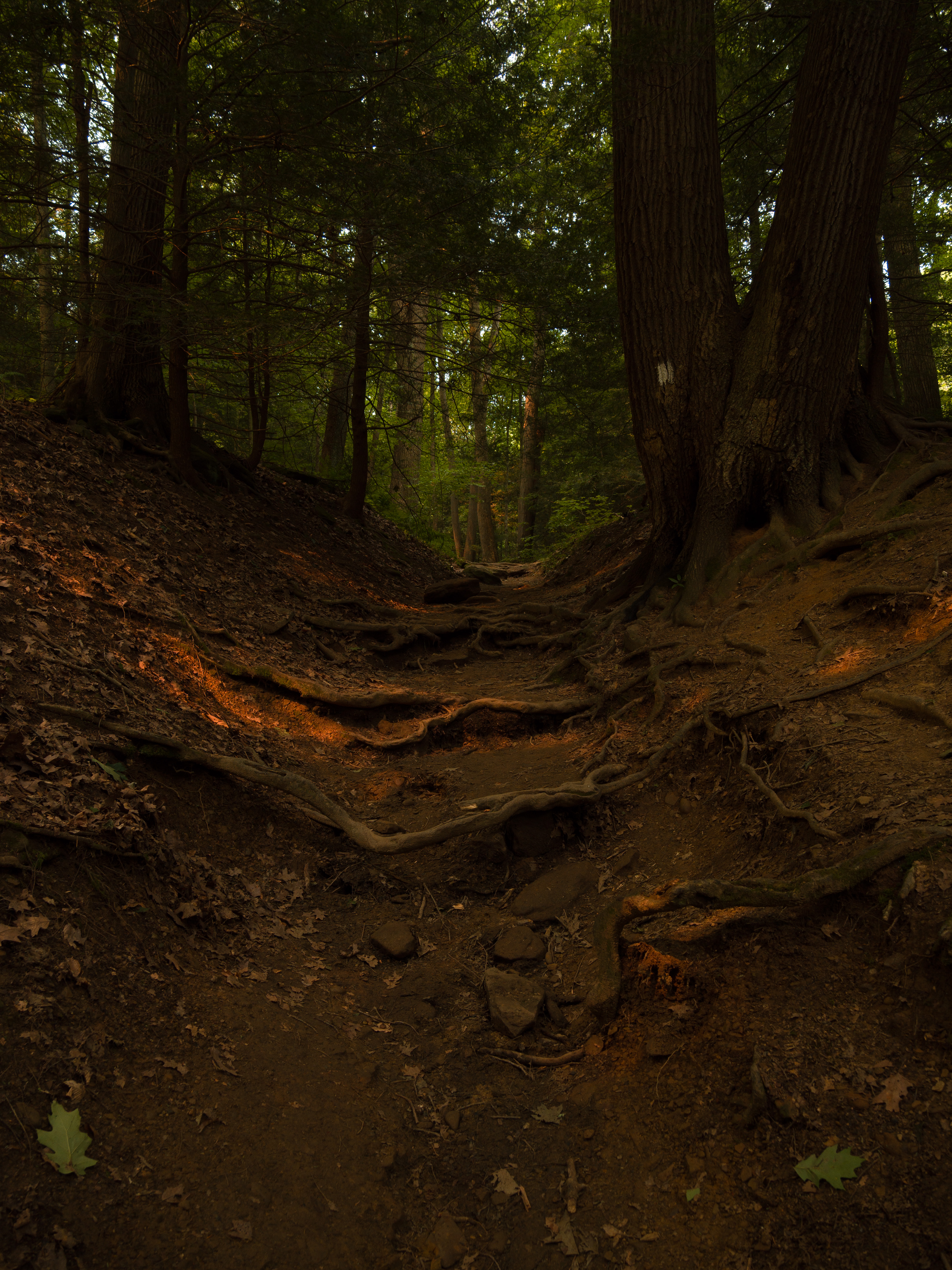
The trail to Big Lyons Falls is filled with areas of exposed roots, lose dirt, and mud. Wearing the right shoes can make a big difference in your comfort.
If I had to choose a favorite section of the entire 10-mile loop, this would probably be it.
From the covered bridge, the Lyons Falls Trail immediately begins carrying you through some of the most varied and visually interesting terrain in Mohican State Park. It’s not an especially difficult hike, but it isn’t effortless either. The trail gently climbs and descends over exposed roots, sandstone, and packed dirt as it weaves between open hillsides, dense forest, and occasional glimpses of the Clear Fork below.
What makes this stretch so memorable isn’t just the destination – it’s the journey getting there.
Over the next mile, you’ll find yourself moving through what feels like several completely different ecosystems. One moment you’re walking beneath a thick canopy of hardwoods with moss-covered rocks lining the trail. A few minutes later, the forest opens into dry, rocky terrain where exposed sandstone and sparse vegetation create a landscape that feels surprisingly unlike Ohio.
Much of this scenery owes its existence to the glaciers that shaped the region during the last Ice Age. Thousands of years of moving ice carved these valleys and exposed the sandstone formations that now give this section of the trail so much of its unique character.
There were several moments where I genuinely forgot I was hiking in Ohio.
The dry soil, scattered pines, exposed rock, and rolling hills reminded me of trails I’ve explored in California’s Gold Country and parts of Colorado. Obviously, the scale is much smaller, but the feeling is remarkably similar. It’s one of those rare places where your brain briefly says, “Wait… where am I?”
This is also where good footwear really begins to earn its keep.
Up to this point in the hike, you’ve already encountered loose dirt, exposed tree roots, muddy sections, slick rock, uneven sandstone, and steep grades. Mohican throws a little bit of everything at you, often within just a few hundred yards. A quality pair of hiking shoes isn’t about making the hike easier – it’s about giving you the confidence to keep your footing regardless of what the trail looks like.
For this hike, I wore a pair of Keen Jasper approach shoes, and they were nearly perfect for the job. Unlike a traditional hiking boot, an approach shoe hugs the terrain more closely while using a very sticky rubber outsole designed to grip rock and uneven surfaces. Whether I was scrambling over roots, walking across sandstone ledges, or picking my way through muddy sections, they inspired confidence every step of the way. I honestly can’t imagine wanting less traction on a trail like this.
Eventually, another sound begins to compete with the birdsong and the breeze through the trees.
The unmistakable sound of falling water grows louder with every step.
Just around the next bend, you’ll arrive at Big Lyons Falls, one of Mohican’s most photographed natural landmarks and the reward for one of the most enjoyable stretches of trail anywhere in the park.
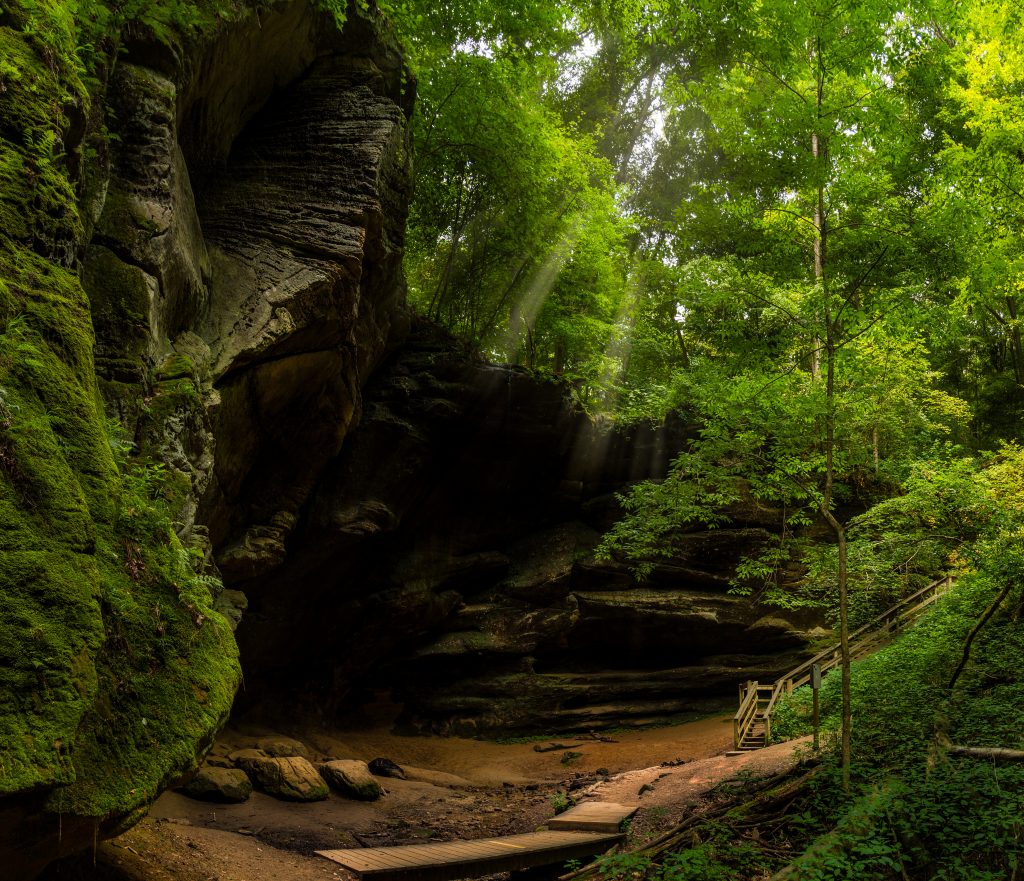
From Big Lyons Falls to Little Lyons Falls
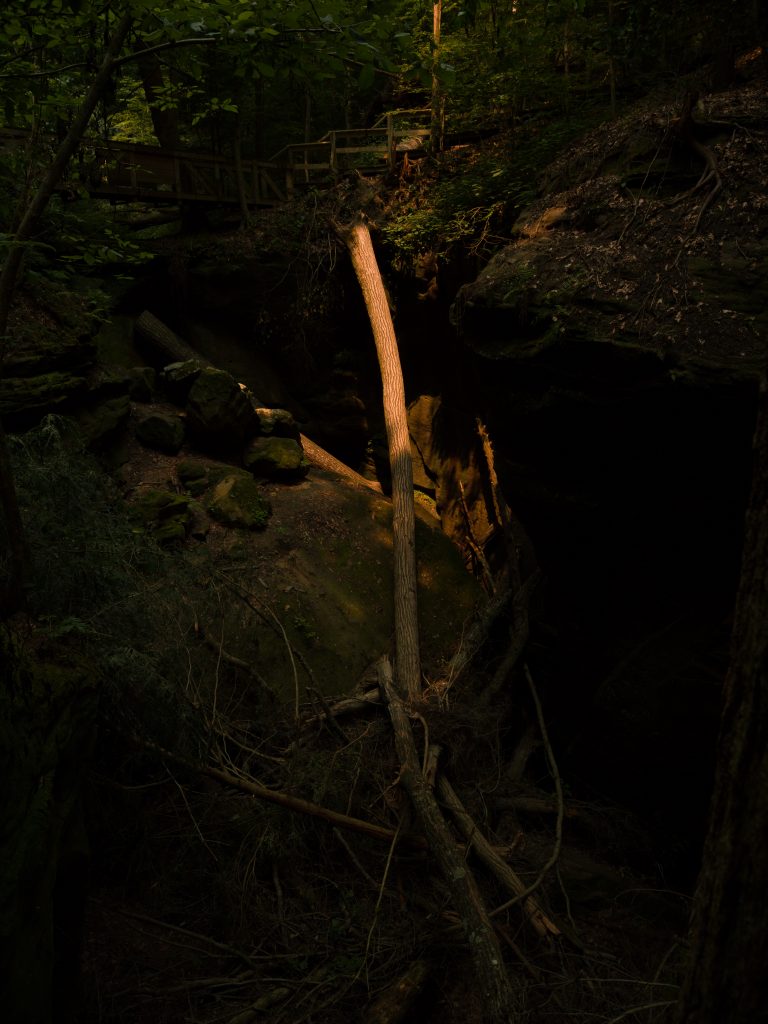
Little Lyon Falls is hidden within the rocky face, but the dark forest creates an almost magic mood that’s found no where else within the park.
Most visitors turn around after reaching Big Lyons Falls.
If you continue toward Little Lyons Falls, however, you’re rewarded with what I think is one of the most overlooked stretches of the entire park.
The first challenge comes almost immediately.
A staircase climbing nearly four stories carries you out of the gorge. It’s a workout, but don’t rush it. When you reach the top, turn around.
Looking back through the opening in the trees, you’ll see a beautiful natural “porthole” framing the valley below and the trail leading back toward Big Lyons Falls. It’s one of those views that’s easy to miss if you’re focused only on the climb.
From there, the landscape changes once again.
The trail winds through impressive sandstone outcroppings and cliffs that were sculpted thousands of years ago by glacial activity. As you make your way along the ridge, you become much more aware of the elevation. In several places, the forest suddenly drops away beside the trail, revealing steep slopes disappearing into the valley below. Through gaps in the trees, you can catch glimpses of what appear to be seasonal streams and small tributaries making their way toward the Clear Fork Mohican River far beneath your feet.
It’s another reminder that Mohican isn’t just beautiful – it’s geologically fascinating.
Eventually, the trail leads you to Little Lyons Falls, and unlike its larger sibling, this waterfall feels almost secretive.
Rather than spilling dramatically over a broad ledge, Little Lyons Falls is tucked into the surrounding sandstone, partially hidden by the very rock that created it. You hear the water before you fully understand where it’s coming from. It quietly works its way through the formation, cascading into the shaded ravine below without the grand spectacle of Big Lyons Falls.
That’s exactly what makes it special.
During the summer, the forest surrounding the falls becomes incredibly dense. Thick vegetation wraps around the gorge, while only a handful of narrow sunbeams manage to pierce the canopy and illuminate portions of the rock face and falling water. The result is a cool, quiet sanctuary that feels wonderfully secluded. Standing there, surrounded by sandstone, towering trees, and the gentle sound of moving water, it’s easy to forget that the campground and covered bridge are only a short hike away.
Little Lyons Falls to Pleasant Hill Dam
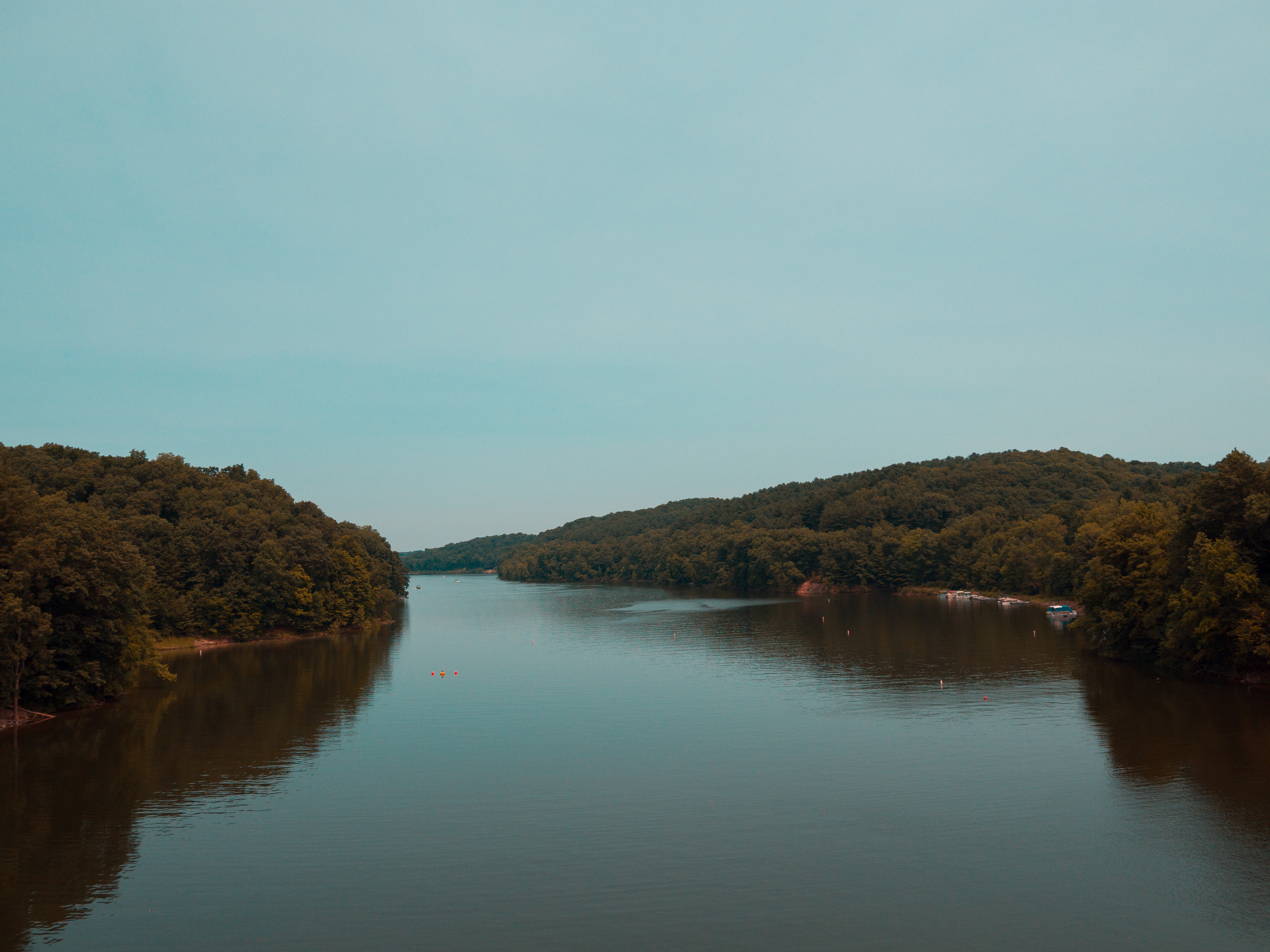
Pleasant Hill Lake as seen from the top of the Pleasant Hill Dam
Leaving Little Lyons Falls, the trail joins the Stagecoach Trail, beginning the final leg toward Pleasant Hill Dam.
Although this is one of the shorter sections of the hike, it’s far from uneventful.
The trail continues along the upper edge of the valley, offering occasional views down toward the Clear Fork Mohican River through breaks in the trees. It’s another reminder of just how much elevation you’ve gained since leaving the river earlier in the day. Looking down into the forest below, you can trace small ravines and seasonal drainages as they work their way toward the river, slowly carving the same landscape that makes Mohican so unique.
One thing that caught my attention was the number of signs indicating that rock climbing and rappelling are permitted throughout portions of this area.
The terrain makes perfect sense for it. Massive sandstone cliffs, exposed rock faces, and dramatic changes in elevation create an ideal playground for climbers. I came to Mohican specifically to hike, but as someone who also enjoys scrambling, climbing, and rappelling, I found myself making mental notes for a future trip. It’s one of those places that feels like it deserves to be explored in more than one way.
Eventually, the forest opens unexpectedly.
Rather than emerging onto a wide gravel path or a formal overlook, you simply scramble down a series of natural sandstone steps, almost as if you’re climbing out of the woods after a day in the backcountry. It’s an unexpectedly rugged transition, and then, almost without warning, you’re standing at Pleasant Hill Dam.
The contrast is striking.
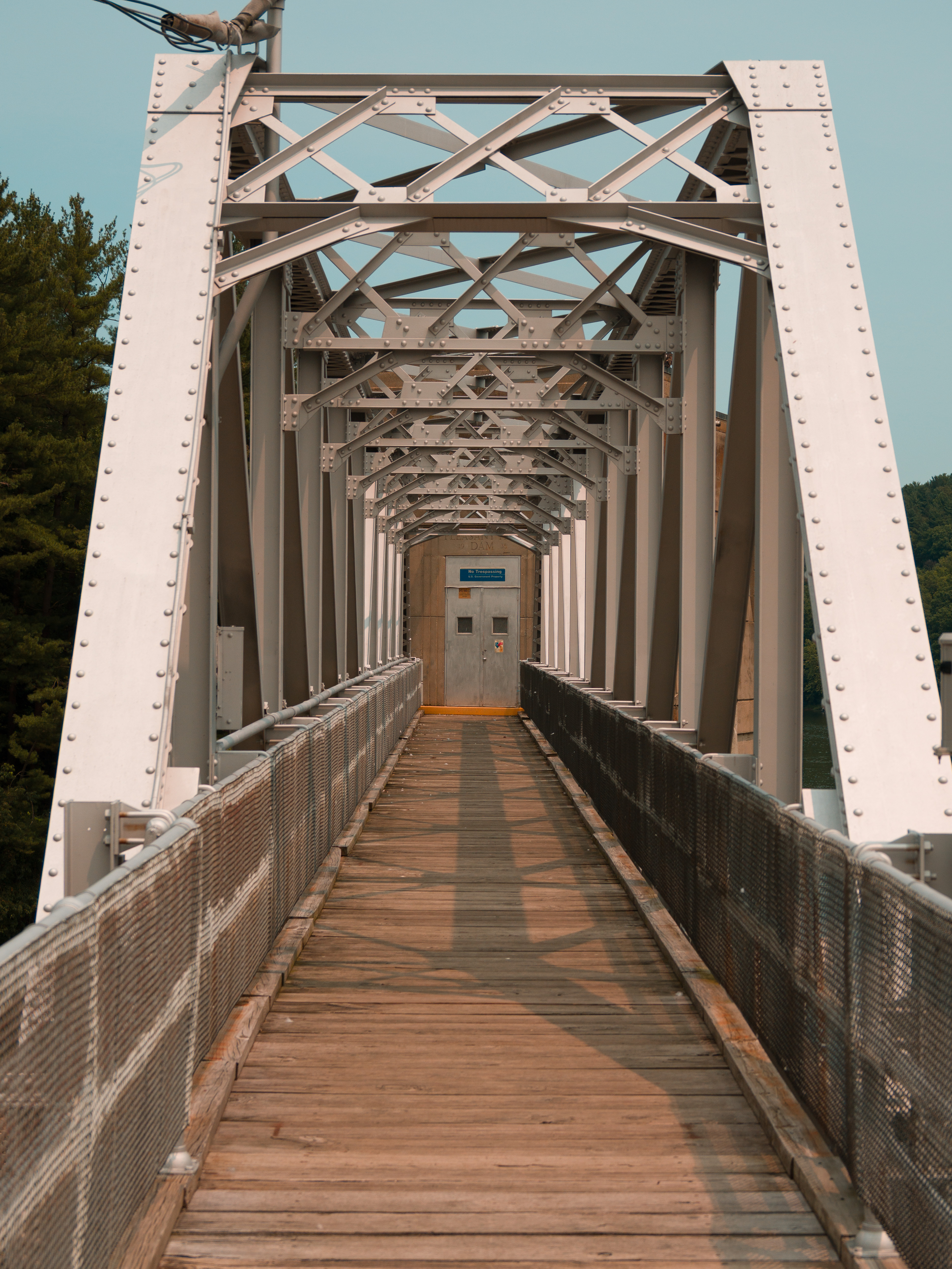
Infrastructure bridges are always cool to explore.
After spending hours surrounded by forests, waterfalls, and sandstone cliffs, you’re suddenly face-to-face with a massive piece of civil engineering. On one side lies Pleasant Hill Lake, where boaters and anglers enjoy the calm reservoir. On the other, the Clear Fork continues its journey through the valley below. The dam itself offers an entirely different kind of beauty. Massive concrete spillways, carefully engineered slopes, and sweeping views up and down the valley make it a fascinating place to stop and take everything in.
I’ve always been drawn to infrastructure. Whether I’m photographing bridges, railroads, or industrial architecture, I love seeing how human engineering fits into the landscape. Pleasant Hill Dam is no exception. It feels substantial without overwhelming its surroundings, and after a morning spent immersed in nature, it’s an interesting reminder that people have been shaping this valley for generations.
From the dam, the route reconnects with the Pleasant Hill Lake Trail. Rather than walking across the length of the dam, you’ll make a right turn and begin heading back toward the river. This section eventually brings you to your final crossing of the Clear Fork Mohican River before reconnecting with the suspension bridge and completing the loop back to the trailhead.
The Final Climb
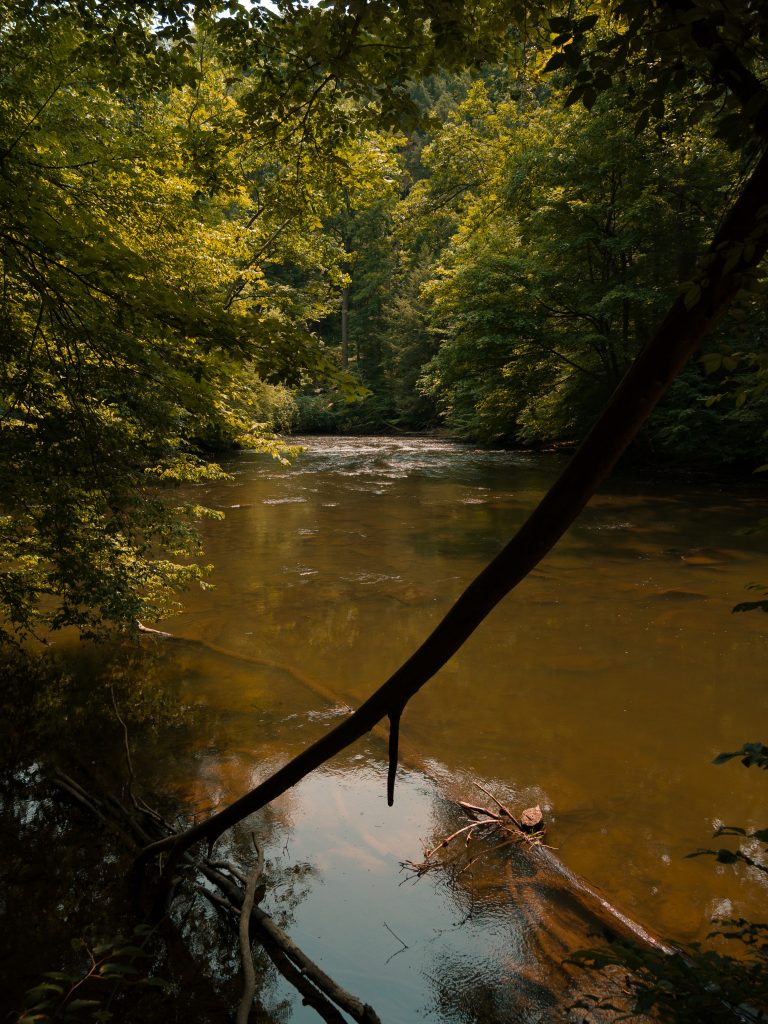
Back-tracking along the river gives you a chance to see the landscape from a new perspective.
From Pleasant Hill Dam, the trail reconnects with the Pleasant Hill Lake Trail, beginning the journey back toward where the day started.
This is probably the most straightforward section of the entire loop. The trail winds through the forest, eventually leading back past the Mohican Covered Bridge, through the campground, and once again alongside the Clear Fork Mohican River. By now, the landmarks feel familiar, but they somehow look different from the opposite direction. The river you’ve spent hours hiking beside now feels like an old friend guiding you back toward the finish.
Eventually, you’ll find yourself standing at the suspension bridge for the second time.
Just like at the beginning of the hike, you have a decision to make.
Turning left will send you back up the same steep, technical descent you tackled earlier in the day. It’s a perfectly valid choice if you’re looking for one final challenge.
I wasn’t.
After nearly ten miles on the trail, I happily turned right, choosing the more gradual switchback climb back to the Gorge Overlook. The trail still gains roughly 400 feet of elevation, so don’t mistake “easier” for “easy.” Instead of scrambling over rocks and roots with your hands, you’re simply asking your legs to do all the work.
And after ten miles…
…your legs have opinions.
The climb is steady, relentless, and surprisingly humbling. Every switchback gives you the feeling that you’re almost there, only to reveal another one waiting just ahead.
Before starting the climb, I made myself one simple promise:
Once I started climbing, I wasn’t going to stop until I reached the top.
No breaks.
No sitting on rocks.
No pretending I was “just enjoying the scenery.”
Just one continuous push.
By the final few hundred feet, my legs were absolutely cooked. Every step required a little more determination than the one before it, and I could feel the miles I’d already covered that day.
But eventually…
…the trail leveled out.
The parking lot came into view.
And I realized I’d kept the promise.
Barely.
Final Thoughts
Eventually, the switchbacks level out, the forest opens one last time, and before you know it, you’re standing back at the parking lot where the day began.
After nearly ten miles, climbing almost 400 feet back out of the gorge, and spending hours hiking through 90-degree temperatures, heavy humidity, and skies tinted orange by smoke from the Canadian wildfires, there’s something almost magical about opening the door to an air-conditioned car. You don’t realize how much you’ve earned that moment until you’re sitting there with cold air blasting across your face.
But almost immediately, your mind starts replaying the day.
The overlook.
The steep descent.
The suspension bridge.
The quiet miles along the Clear Fork.
The waterfalls.
The sandstone cliffs.
The dam.
The climb back to the top.
For me, that’s what makes this hike so memorable. There isn’t a long stretch that feels repetitive or exists simply to connect one destination to another. Every section has its own personality. Every mile offers something different to look at, photograph, or simply appreciate.
I spent the entire day with an OM SYSTEM OM-1 Mark II in my hands, and I can’t imagine a better place to carry a camera. The scenery constantly changes, the light is always evolving, and every turn in the trail seems to offer another composition waiting to be discovered. It’s the kind of hike that encourages you to slow down instead of racing toward the finish.
Some hikes are about reaching a destination.
Mohican is about enjoying everything in between.
By the time I reached the parking lot, I was physically exhausted, but mentally I felt the opposite. Hours away from traffic, phones, deadlines, and distractions have a way of clearing your head. The miles pass almost without notice because your attention is constantly shifting between the trail beneath your feet and the incredible landscape surrounding you.
Without question, this is one of my favorite hikes in Ohio.
If you’ve never experienced the full loop through Mohican State Park, I can’t recommend it highly enough. Come prepared with good hiking shoes, plenty of water, and enough time to enjoy it at your own pace.
Because this isn’t a hike you’ll want to rush.
It’s one you’ll want to do again.